


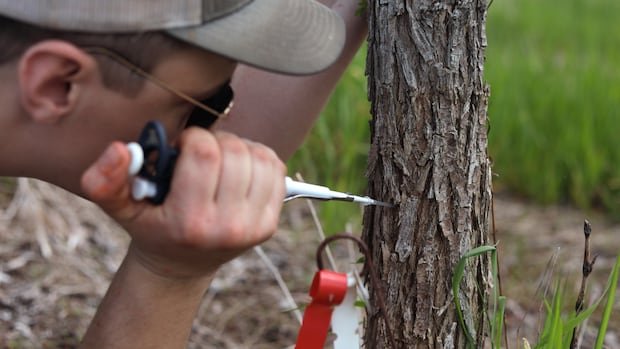

Scientists in Vermont have been actively infecting thousands of trees with Dutch elm disease this summer as part of an experimental study. The aim is to test the resistance of a new generation of elms bred from survivors of the devastating disease that has been affecting elm populations in the U.S. and Canada for many years. The researchers from the U.S. Forest Service and the Nature Conservancy hope to repopulate areas where elms once flourished, such as city streets and riverbanks. The loss of these trees over the years has been described as devastating by conservation experts.
The experiment in Vermont is one of several efforts across North America to develop trees resistant to Dutch elm disease. Experts in Canada are also working on similar projects to combat the disease, which is spreading to new regions. In the past, infected elms were immediately removed to control the disease, but this practice may have unintentionally affected the diversity of elm populations by removing trees that could have naturally built tolerance to the disease.
The impact of Dutch elm disease has been felt in various cities across Canada, with cases reported in Edmonton and Saskatoon in recent years. Efforts are being made to remove infected trees and prevent further spread of the disease by engaging local residents in tree care and management practices. The loss of mature elm trees not only affects the aesthetic value of urban landscapes but also disrupts the ecosystem’s ability to manage stormwater and adapt to climate change.
Ongoing projects, such as the Elm Recovery Project in Guelph and initiatives in Fredericton, aim to enhance resilience against Dutch elm disease by breeding and cloning disease-resistant trees. These long-term breeding programs involve testing thousands of trees to identify those that can withstand the disease. The ultimate goal is to reintroduce disease-resistant elms back into communities, contributing to the restoration of elm populations and the overall ecosystem.
While the process of developing disease-resistant elms is time-consuming, researchers are optimistic about the potential benefits. If successful, these efforts could lead to the coexistence of elms with Dutch elm disease, similar to how elms in Europe have evolved to manage the disease. The natural evolution of elms in Canada to combat the disease could take centuries, but ongoing research aims to expedite this process through innovative breeding and conservation strategies.