


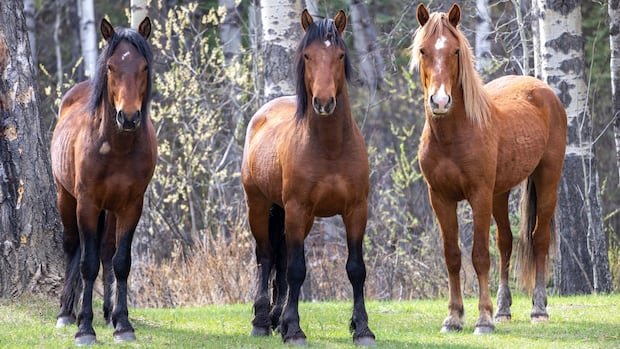

Health Canada has greenlit the testing of a birth control vaccine on free-roaming horses in Alberta. The Alberta government deems it necessary to control horse populations in certain areas to prevent excessive grazing on cattle and wildlife habitats.
Contraception is among the methods specified in Alberta’s feral horse management framework, which also includes removal from the wild and adoption. The province obtained a “research authorization” for the use of the SpayVac-Equid contraception vaccine back in late August, as confirmed by a Health Canada spokesperson to CBC News.
While the approval for general use is pending, Alberta authorities are diligently reviewing the specifics of the contraception approval. The latest feral horse survey identified a record 2,072 wild horses in Alberta’s equine management zones this year, highlighting unsustainable population levels in several zones.
Notably, a previous contraception pilot project initiated in 2014 by the province and the Wild Horses of Alberta Society used a different vaccine called ZonaStat-H. The project revealed challenges such as high costs and logistical difficulties due to the rugged terrain inhabited by the horses.
Wild Horses of Alberta Society president Jack Nichol disclosed plans to administer the SpayVac-Equid vaccine by hand to captured horses and release them back into the wild. This method boasts a high success rate, prevents conception for several years, and does not disrupt herd dynamics. Additionally, the new contraceptive does not necessitate booster shots, unlike its predecessor.
The society aims to kick off the contraception project this autumn as part of a comprehensive population control strategy, which includes capturing a limited number of young stallions for removal from the wild. The overarching goal is to manage horse populations effectively while preserving their presence on the land to accommodate various stakeholders.