


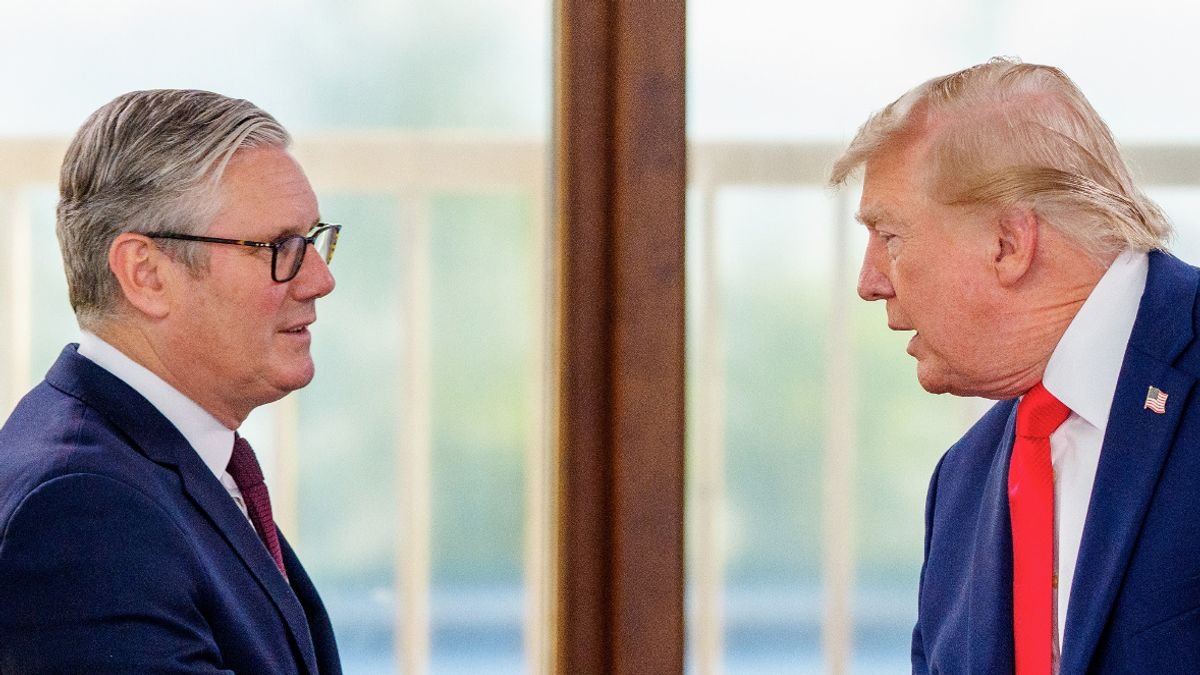

Keir Starmer and Donald Trump have seemingly reconciled their strained relationship during their initial interaction after their disagreement over the Iran conflict.
During the G7 summit, the Prime Minister expressed satisfaction with the “very productive, very good” discussions held with the US President, emphasizing their strong rapport. Starmer mentioned that they spent considerable time together at a two-hour dinner and maintained continuous communication during the summit in Évian-les-Bains, France.
The rift between the two leaders emerged when Starmer expressed reservations about US-Israel strikes on Iran at the end of February.
Despite the absence of a scheduled one-on-one meeting between them, Starmer clarified that he and Trump had engaged in discussions extensively. He highlighted their recent phone conversation and their ongoing interactions during the summit, describing the conversations as fruitful and positive.
In previous incidents, Trump had disparaged Starmer, criticizing him for not permitting US attacks on Iran from British territory and ridiculing UK military capabilities and NATO’s support during conflicts.
Starmer had demanded an apology from Trump for derogatory comments about British troops in Afghanistan, labeling the remarks as insulting and unacceptable.
Amidst domestic challenges over defense spending disagreements, the Prime Minister aimed to focus on international matters during the three-day summit. Not committing to additional defense funding following the resignation of the Defense Secretary, Starmer indicated a potential shift in spending priorities under the new Defense Secretary, Dan Jarvis.
Starmer noted the Labour Party’s efforts to enhance defense spending after perceived neglect by the previous administration in strengthening the armed forces. He confirmed that Trump had not raised concerns about the UK’s defense spending during their interactions.
At the G7 summit, discussions centered on Ukraine, with Starmer observing a positive shift in the collective stance towards supporting Ukraine against Russia. He highlighted unity among world leaders in addressing the ongoing developments in Ukraine, emphasizing the impact of sanctions on Russia.
To demonstrate resolve against Russian aggression, Starmer announced 70 new sanctions targeting Russia’s shadow fleet, military supply chains, and illicit finance networks to disrupt Kremlin operations.