


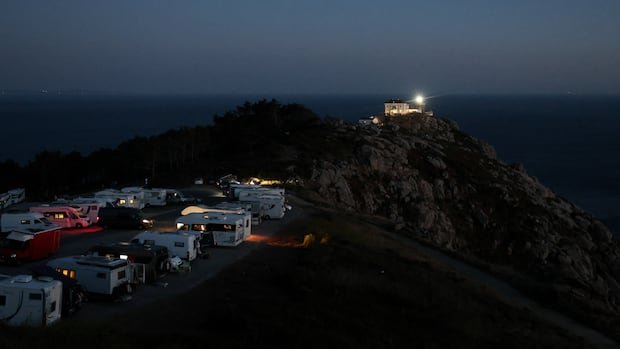

Hundreds of thousands of visitors have flocked to Spain to witness the solar eclipse on Wednesday. However, the country is facing high temperatures and an increased risk of wildfires, prompting concerns among authorities. Virginia Barcones, the secretary general for civil protection and emergencies at Spain’s Interior Ministry, emphasized the need to limit activities that could potentially trigger fires due to the challenging summer marked by significant forest fires.
Spain is currently battling a severe wildfire season as a result of a heatwave that has engulfed Europe since May. According to the European Forest Fire Information System, about 603,000 acres (2,440 square kilometers) of land have been scorched in approximately 400 fires this year. To prevent eclipse tourists from inadvertently contributing to these numbers, authorities are deploying 35,000 officers to monitor large outdoor gatherings on Wednesday for any signs of new fires.
Spain offers a prime viewing spot for the solar eclipse, with the path of totality spanning across northern Russia, eastern Greenland, western Iceland, northeastern Portugal, and a significant portion of northern Spain up to the Balearic Islands. Only individuals within the path of totality will witness the complete coverage of the sun by the moon. While Canada will experience a partial eclipse, viewers are advised to use protective eyewear.
The influx of tourists for the eclipse has led to a surge in travel and accommodations along the totality path. Special measures have been put in place by the Ministry of the Interior to handle the anticipated crowds. A total of 660 official viewing sites have been designated by regional governments to accommodate over 440,000 expected visitors. Authorities estimate that around 1.5 million people could be on the move to these locations, emphasizing the importance of fire safety precautions.
Despite the wildfire risks and scorching temperatures, the excitement surrounding the eclipse remains high. Jan Cami, a professor at Western University, notes the awe-inspiring nature of the event and the unforgettable experience it offers. He hopes that tourists witnessing the eclipse in Spain will also reflect on the broader impacts of climate change and the significance of such celestial occurrences.
The 2026 solar eclipse marks the beginning of a series of eclipses visible from Spain, with two more expected in 2027 and 2028. The upcoming eclipse in 2027 is anticipated to attract even more astrotourists, as the path of totality will extend from southern Spain through North Africa, presenting a unique opportunity to witness the event near iconic landmarks like the pyramids of Giza.