


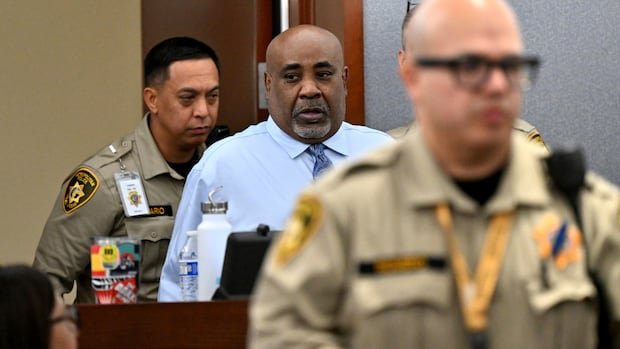

A murder trial involving the fatal shooting of renowned hip-hop artist Tupac Shakur commenced with jury selection for a former gang member on Monday, nearly three decades after the musician’s tragic death. Duane (Keffe D) Davis, aged 63, is facing charges of murder with a deadly weapon related to Shakur’s 1996 death. Davis, who has been detained since 2023, entered a plea of not guilty. The trial, held in Las Vegas where the incident occurred, began with the selection of jurors and is anticipated to span about a month.
During the trial, prosecutors will not seek to prove that Davis carried out the shooting. Instead, they aim to persuade the jury that he held a significant role as the “shot caller” within the group that targeted Shakur in the September 7, 1996, shooting on the Las Vegas Strip.
Clad in a blue dress shirt and tie, Davis sat quietly beside his attorney while Nevada Judge Carli Kierny questioned a pool of 75 potential jurors regarding various matters, such as medical conditions, language barriers, and scheduling conflicts.
William Leslane, Shakur’s cousin, expressed the view that while the trial may bring some form of accountability, true justice has been long overdue. Leslane highlighted the lack of a thorough investigation into the murder when it initially occurred, stating that the delayed legal proceedings have weakened the pursuit of justice.
A significant portion of the evidence in the case is expected to be drawn from a book authored by Davis. In his 2019 memoir, “Compton Street Legend,” Davis detailed his alleged involvement in the shooting incident.
Tupac Shakur, a rising star in the rap scene known for hits like “Dear Mama” and “California Love,” was tragically killed at the age of 25. Despite his New York roots, Shakur was closely associated with West Coast hip-hop. He released four solo albums during his lifetime, followed by six posthumous releases.
At the time of the shooting, Shakur was affiliated with Death Row Records, a prominent record label in the rap industry. Marion (Suge) Knight, the co-founder of Death Row Records and a witness to Shakur’s shooting, has declined to cooperate with law enforcement and testify, as he is currently serving a prison sentence for a separate crime.
The fatal shooting of Shakur took place during the night of September 7, while he and Knight were in Las Vegas to attend a boxing match. Following the match, they were driving in a Death Row-owned vehicle when a Cadillac pulled up beside them and opened fire, resulting in Shakur sustaining fatal injuries. The incident sparked widespread speculation and conspiracy theories, further fueled by the existing tensions between East and West Coast rap artists at the time.
In his book, Davis portrayed the shooting as an act of revenge following an altercation involving his nephew and individuals linked to Death Row Records. He recounted the events leading up to the shooting, emphasizing the retaliatory nature of the attack. Davis provided a detailed account of the shooting, including his actions and observations during the incident.
The trial’s outcome is anticipated to hinge on three key elements, as outlined by legal expert Lucius Outlaw III: Davis’s memoir, related interviews, and statements made to investigators. The co-author of Davis’s book is expected to play a crucial role as a witness in the proceedings.
Reflecting on the tragic event, Davis expressed remorse for his involvement in Shakur’s death, acknowledging the artist’s talent and potential. Shakur’s legacy as a multifaceted artist, actor, poet, and cultural figure continues to resonate with fans and scholars alike.
Overall, the trial marks a significant milestone in the ongoing quest for justice surrounding the untimely demise of Tupac Shakur, a pivotal figure in the realm of hip-hop music and culture.