


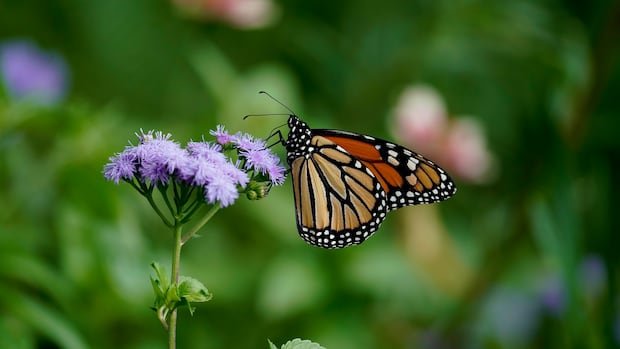

MaryAnn Lepp, a resident of La Broquerie, located around 60 kilometers southeast of Winnipeg, was delighted to observe a significant increase in monarch butterflies in her garden this summer. She noticed 20 caterpillars feeding on her swamp milkweed in just one day. This surge in monarch activity is being witnessed by numerous Canadian enthusiasts, indicating a positive trend for the federally endangered species.
The abundance of caterpillars, chrysalises, and butterflies has been attributed to the favorable weather conditions experienced in certain parts of the Prairie region. While experts cannot definitively confirm the exact cause of this surge, they acknowledge the importance of the growing reports in supporting the monarch butterfly population.
Marika Olynyk, curator of the Living Prairie Museum in Winnipeg, noted a substantial presence of monarchs throughout the season. The museum’s tall grass prairie preserve, rich in native plants, including various milkweed species, serves as a vital habitat for these butterflies. Monarchs primarily rely on milkweed leaves during their caterpillar stage, emphasizing the significance of preserving their natural habitats.
Despite efforts by individuals like Lepp to plant milkweed and native wildflowers, these species are still not as abundant as in the past due to habitat loss caused by agricultural expansion. Olynyk highlighted the critical threat of habitat loss to monarchs, emphasizing the need for conservation initiatives to protect these iconic butterflies.
Monarchs were officially listed as an endangered species in Canada in 2016, following concerns about their declining populations. Efforts to protect monarchs include legal measures prohibiting harm or capture of these butterflies on federal lands. However, ongoing conservation efforts are essential to ensure the sustainability of monarch populations.
In addition to monarch butterflies, the Assiniboine Park Zoo has seen an increase in another critically endangered species, the Poweshiek skipperling. Conservation programs at the zoo aim to support the recovery of this butterfly species through breeding and release initiatives. The positive outcomes observed this summer indicate progress towards the conservation of these vulnerable species.
As part of conservation efforts, the zoo plans to track monarch butterflies’ migration using radio transmitters, providing valuable insights into their journey to Mexico. Enthusiasts like Lepp remain dedicated to protecting caterpillars and chrysalises, contributing to the preservation of these delicate creatures and their habitats.