


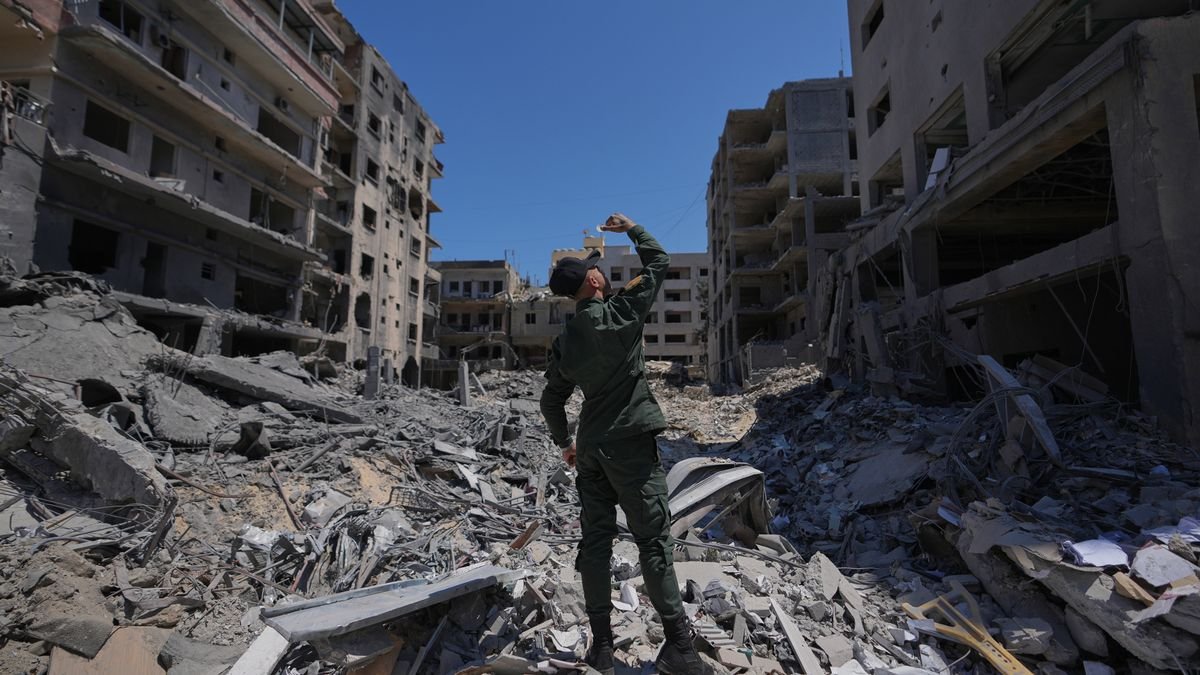

Israel has persisted in striking Hezbollah targets in southern Lebanon despite a ceasefire deal between the US and Iran. The attacks have resulted in at least one casualty, even though Lebanon was part of the ‘memorandum of understanding’ regarding the Iran conflict. US President Donald Trump’s controversial MOU acknowledges the inclusion of Lebanon, which restricts Israel’s ability to counter Iran’s proxy, Hezbollah. This move has angered many Israelis who view the MOU as severely limiting their capacity to defend against Hezbollah by taking offensive actions.
Shortly after the MOU details were disclosed, reports indicated that Israeli representatives were in Washington vigorously advocating to retain troops in Lebanon. A Western security source stated that this development has sparked significant tensions between Israel and the US, as Israelis perceive it as a surrender. Israel has historically preempted Hezbollah by striking within Lebanon and disrupting its potential to pose a greater threat. Although units like Hezbollah’s elite Radwan force have been significantly weakened, Israel fears that complying with the agreement will allow Hezbollah to strengthen its position.
Israel may find itself at odds with Washington, as it has long been engaged in efforts to weaken Hezbollah with notable achievements. The requirement to have troops in southern Lebanon is seen by Israel as crucial for strategically safeguarding its northern communities. Hezbollah leader Naim Qassem hailed the Trump MOU as a major “victory,” while Israeli Prime Minister Benjamin Netanyahu faces the dilemma of opposing Washington. Qassem publicly praised the agreement as a triumph for Iran, crediting Iran for linking Lebanon to the accord and supporting Hezbollah’s efforts to expel Israel from Lebanon.
The MOU, electronically signed by Trump in France with a formal signing scheduled in Switzerland, initiates a 60-day consultation period on peace. While the aim is to reopen the Strait of Hormuz within 30 days, there are expectations of Iranian tariffs on passing vessels. Unlike ex-President Obama’s 2015 Joint Comprehensive Plan of Action, Trump’s MOU is widely perceived as more detrimental, deferring critical issues related to Iran’s nuclear program and omitting measures to curb Iran’s missile arsenal, posing a significant threat to Israel.
Lebanon marks the starting point of the new agreement, emphasizing an end to hostilities in Lebanon and the US commitment not to interfere in Iran. Within 30 days, the US is required to lift its naval blockade and withdraw from the vicinity of Iran. The agreement stipulates the reopening of the Strait of Hormuz and the lifting of oil sanctions, with the US obligated to provide Iran with $300 billion, the funding source of which remains unclear. Negotiations on Iran’s nuclear program and further sanction relief will span 60 days, with Iran pledging not to pursue nuclear weapons.
No new sanctions or reinforcement of US forces in the region are to occur, coupled with a $24 billion payment to Iran, half of which is to be disbursed before the 60-day period ends. Deliberations on uranium enrichment will commence only after half of frozen assets are unfrozen, oil sanctions are suspended, and the naval blockade ceases. Iran’s missile program and support for proxy groups, including Hezbollah, are excluded from the discussions.