


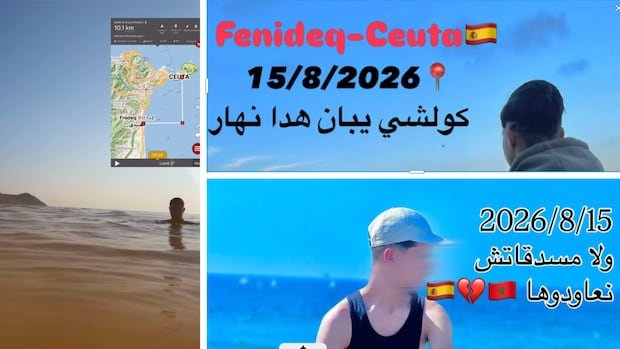

In the lead-up to the recent significant influx of migrants to Europe, a brief Instagram video went viral with 1.4 million views. The video depicted a young man partially submerged in water, with a map illustrating a sea route from Fnideq, Morocco, to Ceuta, a Spanish enclave in Africa. This video, along with other posts on platforms like Instagram and TikTok, seemed to have influenced two waves of irregular migration from Morocco to Ceuta. The most recent attempt on August 15 resulted in numerous arrests.
Various online communities promoting migration-related content, such as music and memes, were involved in these activities. Some of these accounts exploited the aspirations of African and Middle Eastern youth seeking better opportunities abroad for potential gains.
While there is debate among governments and organizations regarding the orchestrator of the events in Ceuta, it is evident that misinformation spread through multiple online channels played a significant role in driving the migration flows during the summer.
A joint effort by Meta and TikTok to fact-check posts aimed to combat the exploitation of migrants by criminal groups through misinformation. Despite these measures, new posts emerged ahead of August 15, signaling another opportunity for migrants to enter Spain. Moroccan and Spanish authorities were prepared this time, resulting in the arrest of nearly 300 migrants.
The surge in social media activity was fueled by successful migrant crossings prior to the recent events. The Mixed Migration Centre noted that Ceuta had become a popular entry point into Spain, with a notable increase in land crossings compared to the previous year.
While social media played a role in shaping the narrative around migration, the underlying desire to migrate existed independently. Young individuals in North Africa and beyond, facing challenges like high unemployment and political disenfranchisement, found the migration-related content appealing.
Accounts originating from North African countries and Europe, including Morocco, Algeria, Italy, and Turkey, promoted migration to Europe without explicitly offering services. These accounts used aspirational language and imagery to attract followers, reflecting the desperation and disillusionment prevalent among the youth seeking better prospects abroad.
The widespread circulation of migration-related messaging underscores the pressing socio-economic issues faced by many individuals, leading them to view migration as a viable option. Despite the efforts to address misinformation, the allure of migration persists among vulnerable populations seeking a better future.