



Parts of British Columbia have faced significant drought conditions this summer. In Bessette Creek, water restrictions were imposed to safeguard salmon populations due to critically low water levels. Temporary protection orders were also initiated for the Salmon River watershed in response to heightened wildfire risks.
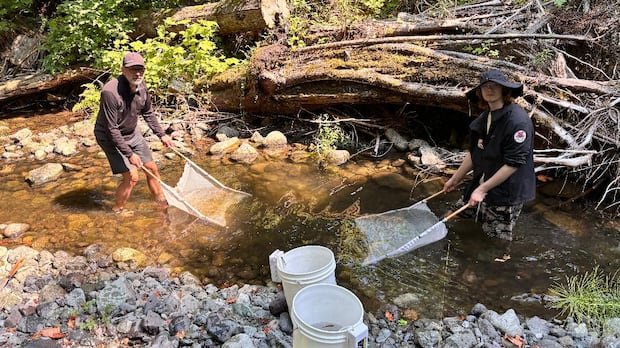
The Cowichan Lake Salmonid Enhancement Society in Vancouver Island, led by Bob Crandall, has observed worsening dryness in the 16 streams connected to Lake Cowichan. To counter this, the society conducts fry salvage, rescuing fish from drying rivers and relocating them to other water bodies.
Crandall emphasized the responsibility of humans in mitigating ecosystem challenges caused by their actions. While communities in British Columbia support such interventions, scientists caution about the limitations and effectiveness of these short-term solutions.
Collaborating with the Ts’uubaa-asatx Nation and volunteers, Crandall focuses on relocating salmon, trout, and char to areas with more water resources. However, climate change has made the task more arduous, with streams drying up farther upstream than before.
Efforts involve using aerators and nets to transport fish, with challenges arising from traversing dry streambeds under sweltering conditions. The Ts’uubaa-asatx Nation plays a crucial role in the fry salvage work, utilizing drones to monitor drying streams.
The importance of salmon to the Ts’uubaa-asatx Nation underscores their commitment to conservation efforts, including river restoration and ocean conditions. However, challenges persist as drought and extreme heat impact rescue operations globally.
In France, severe drought conditions have rendered fish relocation ineffective, with unprecedented weather events exacerbating the situation. Climate change-induced warm water temperatures have escalated physiological stress on fish, necessitating a shift towards ecosystem restoration and sustainable water management practices.
Jean-Pierre Faure of the Fédération de Pêche du Rhône highlighted the adverse effects of high water temperatures on fish survival, emphasizing the need for long-term solutions over short-term interventions like rescue fishing. Addressing ecosystem restoration and water-use management is deemed more sustainable than extensive fish relocation efforts in severely affected watersheds.