


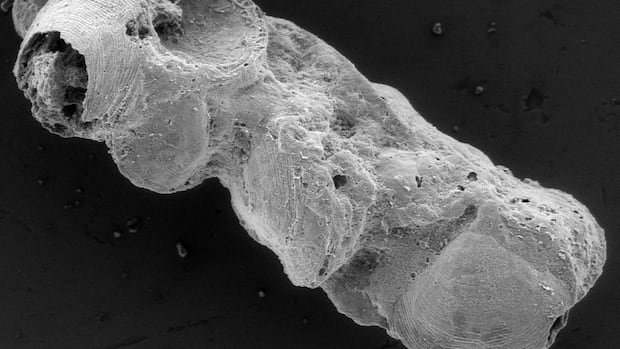

Long before the era of dinosaurs, a surge of biodiversity led to the appearance of early ancestors of modern animals – and an uptick in fecal matter. A recent study sheds light on the significance of coprolites, or fossilized feces, in understanding ancient Earth ecosystems, nutrient cycles, and contemporary animal interactions.
Published in the journal Trends in Evolution & Ecology, the research delved into the examination of fecal fossils dating back to the Cambrian period, approximately 540 million years ago. By studying fecal records of primitive worms, invertebrates, and mollusk-like creatures, scientists inferred that fecal material played a crucial role in enhancing the habitability of deep water ecosystems and increasing nutrient availability during that period, long before the existence of dinosaurs.
The study’s discovery of the abundance of fecal matter during the Cambrian era holds significant implications for unraveling the origins of present-day ocean ecosystems. According to Julien Kimmig, co-author of the paper and head of the paleontology division at the Karlsruhe Natural History Museum in Germany, the presence of feces in marine ecosystems is a vital factor often overlooked, which sustains the modern marine environment and influences evolution.
Analyzing hundreds of coprolites from 37 global deposits, researchers, including Kimmig and Russell Bicknell, studied feces from various burrowing worms, arthropods, brachiopods, and hyoliths. The coprolites ranged in size from microscopic to resembling rabbit droppings, eventually growing larger and more discernible with embedded shell or worm fragments over time.
Apart from shedding light on evolutionary aspects and predator-prey relationships, studying coprolites aids in comprehending Earth’s ecology and the impact of the Cambrian Explosion on ecosystems. Kimmig emphasized that paleontology’s relevance lies in understanding how past ecosystems adapted to environmental changes, offering insights that may guide predictions about future ecological scenarios.
The study highlighted a substantial increase in fecal content during the Cambrian Radiation compared to the preceding Ediacaran period. This expansion of feces, alongside predator-prey dynamics and evolutionary processes, underscores the importance of fecal analysis in gaining a comprehensive understanding of ancient ecosystems and their implications for modern and future environments.
In the realm of paleontology, coprolites have emerged as a pivotal research focus, providing unique insights into past organisms and their interactions. Karen Chin, a renowned paleontologist and curator at the University of Colorado Museum of Natural History, highlighted the significance of coprolites in uncovering ancient biological interactions, nutrient cycles, and carbon utilization, offering a distinct perspective on prehistoric ecosystems.
Chin’s exploration into coprolites during the Mesozoic era, characterized by the dominance of dinosaurs, elucidates not only the dietary habits but also the intricate interactions among ancient organisms. Coprolites, though challenging to study and often overshadowed by more charismatic fossils, play a crucial role in deciphering the complexities of ancient ecosystems and expanding our knowledge of prehistoric life.
The research underscores the importance of coprolites in enhancing our understanding of past ecosystems and their relevance for predicting future environmental changes. Emphasizing the need for increased interest and research in coprolites, paleontologists aim to uncover more hidden insights into ancient life forms that could offer valuable lessons for modern and future ecological scenarios.