


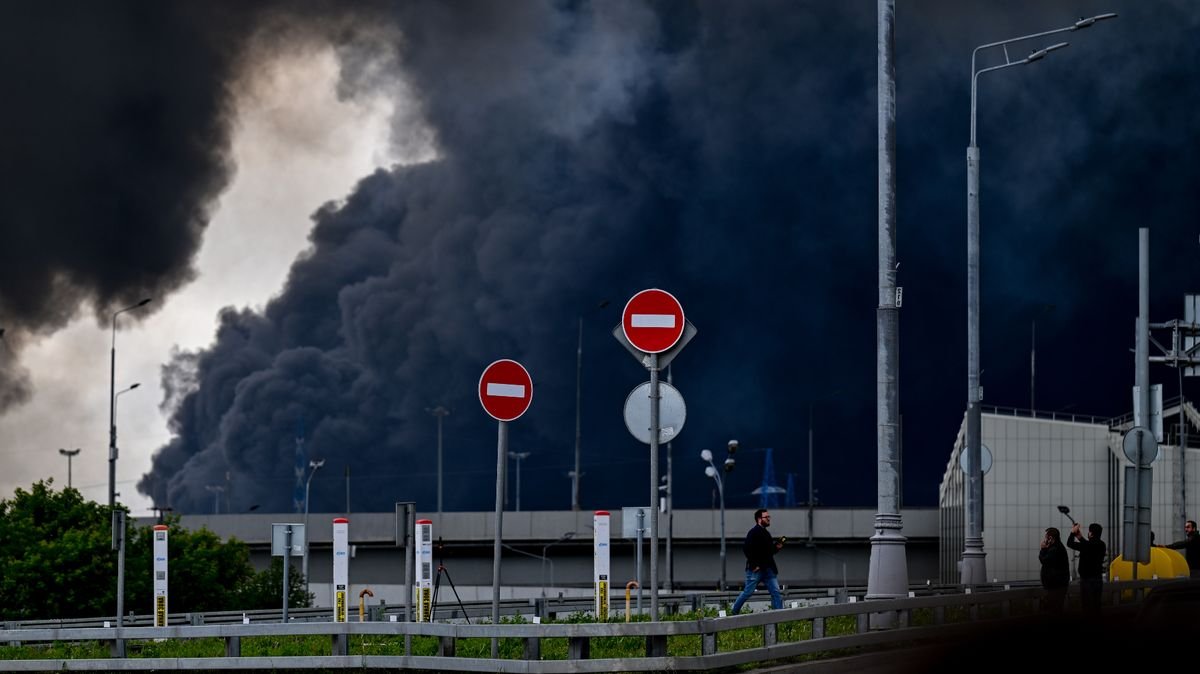

Ukraine has initiated a significant offensive involving multiple Russian regions, including Moscow and Crimea, dealing a major blow to President Vladimir Putin. The overnight bombardment marks the commencement of a 40-day intense warfare campaign ordered by President Volodymyr Zelensky to compel Russia to cease its aggression against Ukraine.
Simultaneously, there are reports indicating that the Kremlin might be considering an attack on either Poland or one of the Baltic States as retribution for supporting Ukraine in the conflict. Belarus, a neighboring country and ally of Russia, is reportedly fortifying its borders with troops and camps under pressure from Putin to align with his halted invasion efforts. Prior to the recent attack, Zelensky declared, “I approved a 40-day operation to influence the aggressor state and push for an end to the war.”
In the latest assault, approximately 660 Ukrainian attack drones were deployed against Russia, with specific targets including a chemical plant in the Tula region and various military installations. This attack, following Zelensky’s warning of retaliation against Russia, is considered one of Ukraine’s most extensive deep-strikes to date.
For the second time in a week, thick black smoke enveloped Moscow amid concerns that Putin might authorize attacks on NATO member countries in the near future. The targeted Azot chemical plant in Tula is a key player in Russia’s chemical industry, producing essential industrial chemicals and fertilizers. The facility is reportedly linked to Russia’s defense manufacturing sector, as it manufactures products used in explosives and ammunition production.
Residents in the area reported hearing explosions and witnessing drones overhead for hours, accompanied by a strong smell of ammonia and power outages. Furthermore, explosions were reported in Russian-occupied Crimea, with blasts near the Kerch ferry crossing, where locals detected smoke and burning odors.
The Kerch region serves as a vital military logistics hub for Russia, connecting occupied Crimea to the mainland. Zelensky confirmed that Ukrainian forces targeted two Russian oil refineries in Ufa, over 1,000 miles away from the frontlines. Additionally, an oil depot in the Krasnodar region, located 250 miles from Ukraine, was also struck, further impacting Russian infrastructure.
As Ukraine intensifies its offensive against Russia, intelligence agencies in Eastern Europe suspect that Putin may be planning provocations against Poland or the Baltic States due to their support for Ukraine. While a large-scale attack from Russia is unlikely, there are concerns about potential terrorist-style incidents or isolated missile strikes. Putin’s frustration over stalled progress in eastern Ukraine has escalated as Ukraine continues to target Russian infrastructure with deep-strike drone and missile capabilities.
Since the inception of the conflict in Ukraine, there have been instances of Russian sabotage, such as planting firebombs in DHL parcels across the UK, Poland, and Germany in the summer of 2024. Moreover, last September, 19 Russian decoy drones breached Polish airspace, prompting NATO intervention to intercept them. However, Ukraine’s advancements in deep-strike drone and missile technologies enable them to target locations over 1,500 miles inside Russia.