


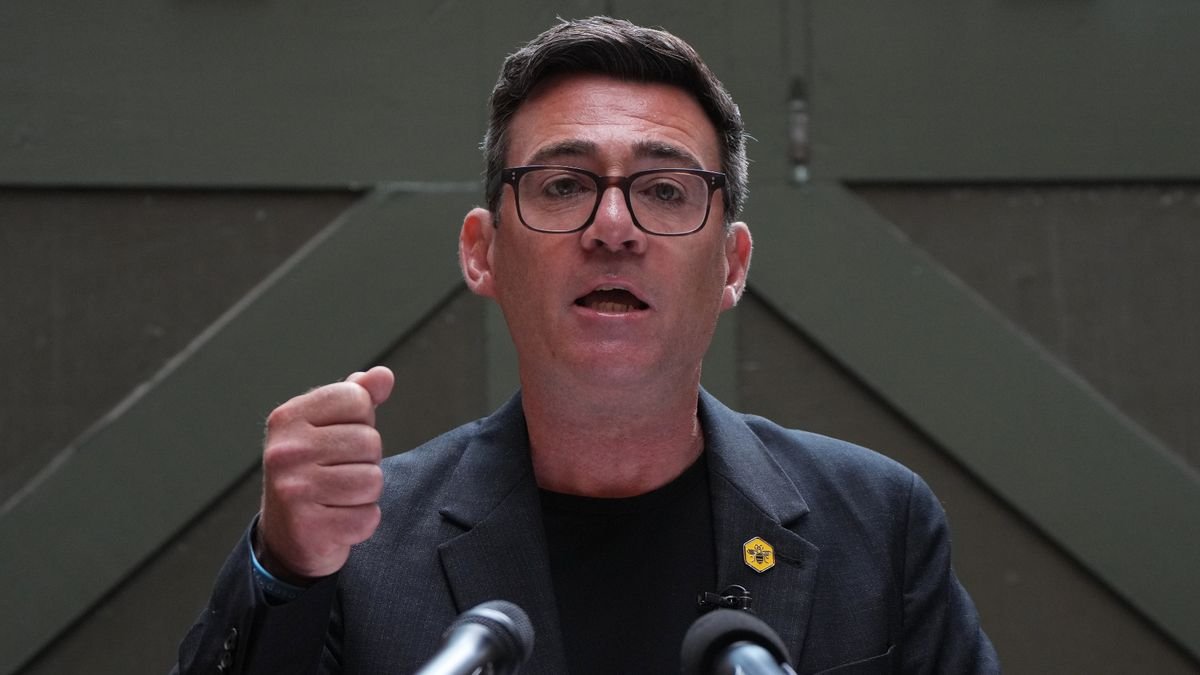

Andy Burnham has been cautioned about a looming surge in the UK’s national debt, described as “explosive” by the Office for Budget Responsibility (OBR), the government’s fiscal watchdog. The OBR has highlighted that the public finances are on a concerning trajectory of continuous growth.
Currently, the UK’s national debt amounts to nearly £3 trillion, representing close to 100% of the country’s gross domestic product (GDP). The OBR’s latest report warns that this figure could potentially escalate to 300% over the next five decades, reaching approximately £9 trillion in today’s monetary value.
Various scenarios outlined by the OBR indicate an unsustainable path for public finances, with projections suggesting that “debt will ultimately grow explosively.” These projections coincide with Andy Burnham’s impending assumption of the prime ministerial role, where managing the escalating debt and public sector borrowing will be significant economic challenges.
The OBR has emphasized the challenging position of the UK’s public finances compared to historical data and similar nations, noting a substantial increase in government debt relative to GDP over the past twenty years. Factors contributing to this strain include an aging population and a surge in healthcare expenditure, which are expected to further burden the public finances over the next half-century.
Population estimates suggest that the UK will peak at around 73 million by 2050 before a decline begins, with healthcare spending projected to rise from 8% of the economy in 2030/31 to 13% by 2075. The triple lock policy, a commitment to increasing state pension based on earnings, inflation, or a fixed percentage, has proven more costly than anticipated due to volatile inflation trends.
Projections indicate a significant rise in adult social care costs from 1.2% of GDP in 2030/31 to 1.8% by 2075/76, aligning with the growth rate of healthcare spending. Despite an increase in government spending, a decline in tax revenue is expected due to the transition to electric vehicles, impacting income from fuel duty.
William Ellis, a senior economist at IPPR, has underscored the importance of maintaining fiscal rules for market stability and responsible borrowing. The OBR’s report emphasizes the necessity of long-term sustainability in public finances, considering challenges posed by aging demographics, climate change, and productivity issues. Ellis suggests a potential reevaluation of fiscal rules to address these prolonged fiscal challenges in the future.