


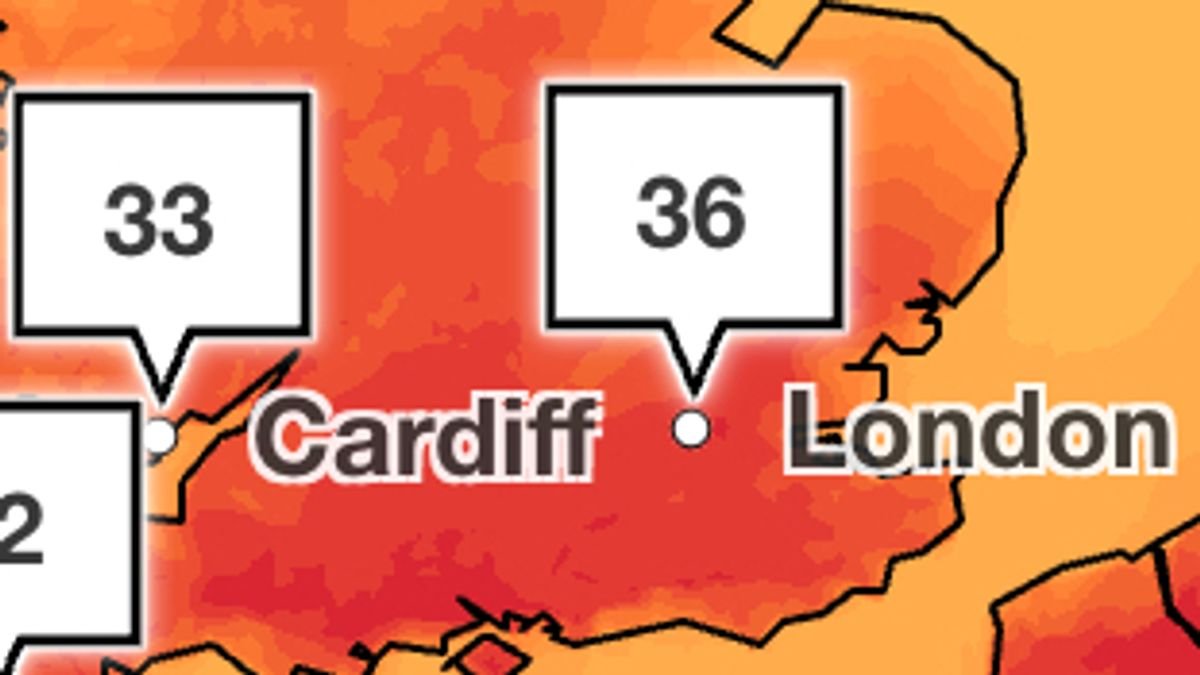

Britain is expected to surpass a 50-year heat record, with scientists cautioning that heatwaves will grow more severe. Schools nationwide are closing early as the country prepares to exceed the June temperature record of 35.6C set in 1976. London and parts of the South East are forecasted to reach 36C on Wednesday, potentially soaring to 39C in some areas by Thursday.
Transport authorities are advising against non-essential travel, and numerous schools in England and Wales are closing or ending classes early this week to prevent students from overheating in classrooms. Students have been permitted to wear PE kit instead of full uniforms due to the heat.
One affected school is Buckingham School in Buckinghamshire, which will be shut on Wednesday and Thursday, switching to online learning. The school stated on its website that the closure decision was made due to inadequate cooling in most buildings and limited shade outdoors. All planned activities and trips have been canceled.
This heatwave coincides with the 50th anniversary of the infamous heatwave in 1976, marked by water shortages, failed harvests, increased food prices, and people resorting to using foil on windows to block the sun. Professor Stephen Belcher, Chief Scientist at the Met Office, emphasized the increasing frequency and intensity of heatwaves in the UK. The current extreme heat warning, coinciding with the 1976 heatwave anniversary, underscores the concerning trend.
The Met Office issued a red weather warning for extreme heat covering regions from London to Swansea and Somerset to Birmingham from 9am Wednesday to 9pm Thursday. Jake Kelly, Network Rail’s Deputy Chief Executive, stressed the impact of extreme heat on railways and urged passengers to travel only if essential within the red warning zone during the peak temperatures on Wednesday and Thursday.
Chiltern Railways, operating between London and Birmingham, has already canceled over half of its regular services. A ‘heat-health’ Red Alert has been issued for six UK regions, including the West Midlands, East Midlands, South East, South West, London, and East of England, while an amber alert covers the North West, North East, and Yorkshire and the Humber.
Health authorities are cautioning NHS and social care services to be prepared for the heatwave, highlighting the risk to even healthy individuals. Forecasts suggest temperatures could surpass the Hampshire record set in 1976 and approach the UK’s all-time high of 40.3C recorded in July 2022.
Professor Hayley Fowler from Newcastle University emphasized the need for urgent action to mitigate the impacts of future heatwaves. Professor Ed Hawkins from the University of Reading noted the significant temperature difference between the 1976 event and today’s warmer climate, projecting even hotter heatwaves in the future.