


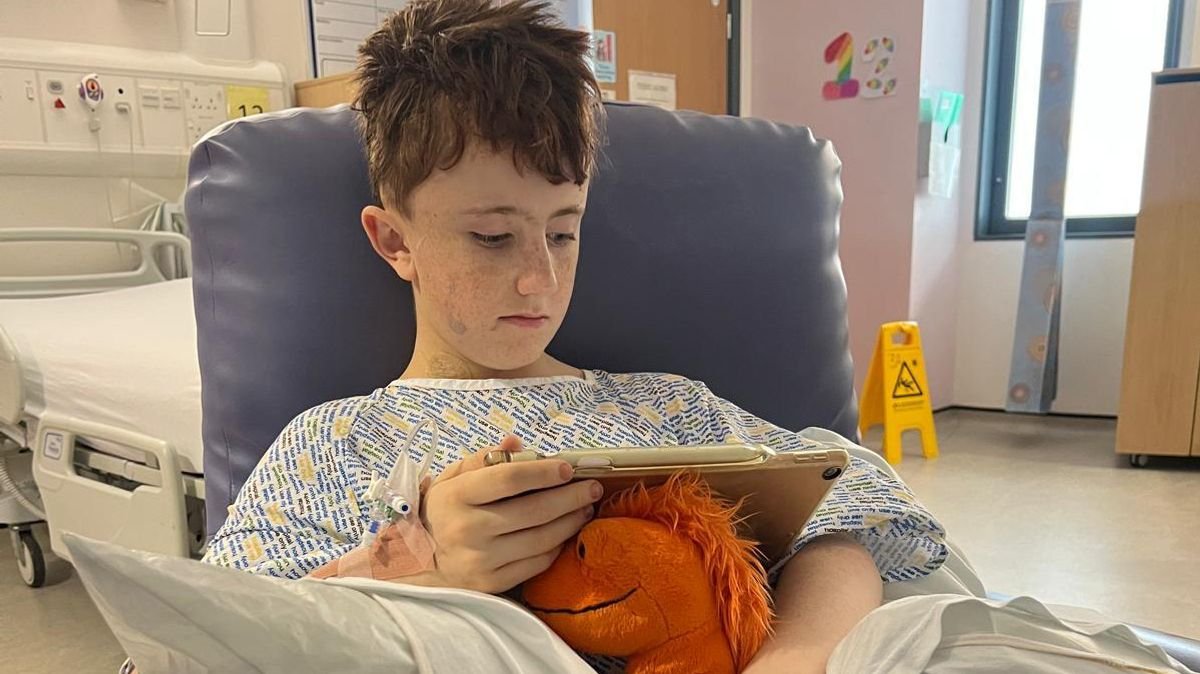

A young adolescent in Scotland recently underwent groundbreaking surgery to address a brain tumor after experiencing unusual sensations in his leg. Toby Peart, a 13-year-old from Strathpeffer, was among the first individuals in the country to benefit from advanced technology introduced in Scotland.
In April 2025, Toby began feeling pins and needles and discomfort in his left leg, symptoms that worsened progressively over months. Following an MRI scan at Raigmore Hospital in Inverness, a brain tumor was identified, leading to his referral to a specialized facility in Glasgow for treatment. The Royal Hospital for Children in Glasgow had recently adopted a new approach involving a 3D exoscope to improve precision in intricate brain surgeries.
The medical team at NHS Greater Glasgow and Clyde utilized the B Braun Aesculap Aeos 3D Robotic Assisted Exoscope, offering exceptional image quality, intense illumination, and enhanced depth perception. After confirming a non-cancerous tumor on the right side of Toby’s brain, measuring around 13-14mm, surgery was recommended. In November, the procedure took place at the Royal Hospital for Children in Glasgow, incorporating the 3D exoscope for enhanced surgical accuracy.
Toby’s father, Marc, expressed gratitude towards the healthcare professionals who supported his son during the tumor removal using innovative technology. Marc described the challenging period as one of the toughest for the family, highlighting Toby’s quiet nature and the sudden realization of the severity of his condition.
Post-surgery, Toby faced potential risks such as sight loss or paralysis, but he displayed remarkable progress despite initial weakness and paralysis on his left side. Overcoming these difficulties, Toby regained strength and mobility, eventually returning home a week after the surgery and resuming school in January.
NHS Greater Glasgow and Clyde’s adoption of the B Braun Aesculap Aeos 3D Robotic Assisted Exoscope marked a significant advancement in surgical capabilities, allowing for improved visualization and operational ergonomics. Consultant neurosurgeon Roddy O’Kane emphasized the technology’s benefits in enhancing safety and effectiveness during brain surgeries, particularly in pediatric cases.