


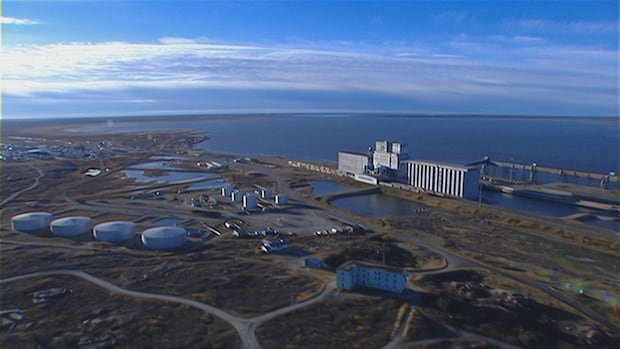

Year-round shipping on Hudson Bay is feasible without the need for high-cost icebreakers, as confirmed by a spokesperson for Premier Wab Kinew. Studies investigating the extension of the shipping season, a key component of the Port of Churchill expansion plan, have shown promising results, according to Amy Tuckett-McGimpsey.
The Manitoba government is set to disclose the findings of these studies on Friday. Arctic Gateway Group, in collaboration with Fednav shipping company, has been evaluating the requirements for enabling year-round shipping at the Port of Churchill. Additionally, both the provincial and federal governments have commissioned a study by the Arctic Research Foundation, founded by former Blackberry chair Jim Balsillie, to assess the feasibility of extending the operational season at the port.
While the Fednav study has been finalized, the Arctic Research Foundation study is scheduled for completion in March 2027, as mentioned by Kinew spokesperson Rebecca Widdicombe. The premier intends to unveil details from both studies ahead of a summit in Toronto in September, where the expansion of the Port of Churchill will be presented to global investors.
Based on insights from the studies, Premier Kinew highlighted that diminishing sea ice will allow for the navigation of Hudson Bay using icebreakers costing between $50 million to $100 million, rather than the previously anticipated multibillion-dollar vessels.
However, it should be noted that CBC News has not independently reviewed the studies to confirm their content. The proposed expansion of the Port of Churchill encompasses various elements, including revamping the Hudson Bay Railway to accommodate higher payloads. The Arctic Gateway Group, comprising 29 First Nations and 12 remote communities in northern Manitoba, aims to enhance storage and loading facilities at the port.
Furthermore, there are plans to explore the potential of shipping goods through Hudson Bay earlier and later in the season, utilizing icebreakers and ice-hardened tugboats. Premier Kinew has also floated the idea of constructing a natural gas or oil pipeline to Churchill and establishing a year-round access road to the community.
In a previous market sounding for the expansion, the federal government did not release the outcomes publicly. An earlier study conducted by consulting firm PwC in 2023 indicated short-term opportunities to increase cargo shipments through the Port of Churchill with minimal investment. However, the prospects for a more substantial investment in a northern Manitoba trade corridor were less definitive.
The study highlighted possibilities to export nickel, silica sand, and grain through the port, with potential for shipping potash with additional investments. It also pointed out limited market potential for transporting crude oil, natural gas, or hydrogen through Hudson Bay.
Moreover, the study raised concerns regarding the impact of climate change on the Port of Churchill and the Hudson Bay Railway, emphasizing the need for expensive maintenance to address challenges such as thawing permafrost. The construction of an all-season road to Churchill was estimated to cost up to $1.2 billion with significant annual maintenance expenses.
Residents of northern Manitoba expressed support for modest port development to enhance railway services but voiced apprehensions about extensive industrial growth in Churchill. Opposition was particularly strong against the movement of oil through the Hudson Bay Railway or the Port of Churchill due to environmental concerns and potential impacts on indigenous communities.
Arctic Gateway CEO Chris Avery noted that the 2023 PwC report was written before Canada’s heightened focus on major projects, underscoring the importance of building a resilient business at the port. The federal government recognized the Port of Churchill expansion as “nationally significant infrastructure” in 2025 but did not include it in the list of major national projects approved for advancement.