



Montreal police have been expanding their array of AI-driven tools to monitor vehicles and individuals throughout the city, sparking concerns regarding transparency and privacy rights.
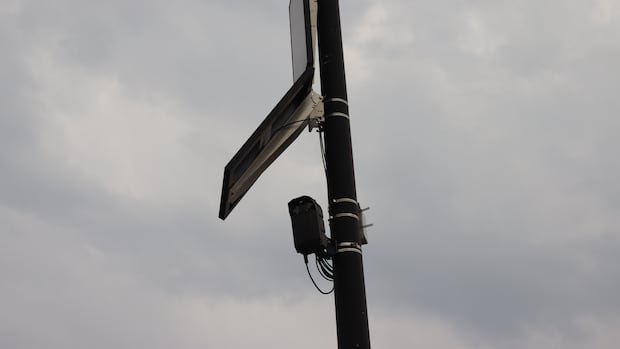
Recently, a high-tech camera capable of scanning and recognizing vehicles was observed by a Radio-Canada journalist on a lamppost along Henri-Bourassa Boulevard in Montreal’s Rivière-des-Prairies neighborhood. The camera, identified as a Cloudrunner CR-H2 manufactured by Montreal’s Genetec, was promptly removed following media coverage.
Unlike the controversial Flock Safety cameras prevalent in the United States, the Genetec system not only scans license plates but also captures and stores detailed vehicle attributes such as color, make, and model. While Flock cameras share data in a centralized database accessible to multiple law enforcement agencies, Genetec’s approach involves managing the collected information internally.
According to SPVM spokesperson Marc-Antoine Bélanger, access to the captured images is restricted to investigators handling the relevant cases. The SPVM rationale for keeping the use of such technology under wraps is to safeguard ongoing investigative strategies.
Privacy advocates, however, argue that there is a lack of transparency in deploying new technological advancements. Dominique Peschard from the Ligue des droits et libertés emphasized the importance of public awareness of law enforcement tools without compromising operational effectiveness.
The adoption of Cloudrunner cameras is part of the SPVM’s broader integration of AI-powered technologies. The police force has acknowledged the use of iMotion ROC AI software from Rank One Computing to assist in analyzing extensive video footage. SPVM spokesperson Anik de Repentigny clarified that the software does not perform facial recognition or biometric identifications but aids in locating specific elements within video content.
An internal privacy impact assessment highlighted potential civil liberties risks associated with the technology, including the inadvertent investigation of innocent bystanders. Despite concerns, SPVM assured that the software operates independently from external databases to ensure privacy.
The SPVM’s acknowledgment of the Cloudrunner camera utilization came after initial confusion, with Police Chief Fady Dagher later confirming its purpose in targeting armed violence and vehicle thefts. While only one camera was discovered and removed, additional units may be deployed based on investigative requirements.
Genetec’s vice-president, Andrew Elvish, stressed the technology’s privacy-centric design and the meticulous logging of data interactions. The balance between public safety and individual privacy remains a key consideration amid the deployment of advanced surveillance tools.
In conclusion, stakeholders emphasize the necessity for stringent oversight and proactive measures to safeguard privacy rights in the face of evolving technological capabilities within law enforcement practices.