


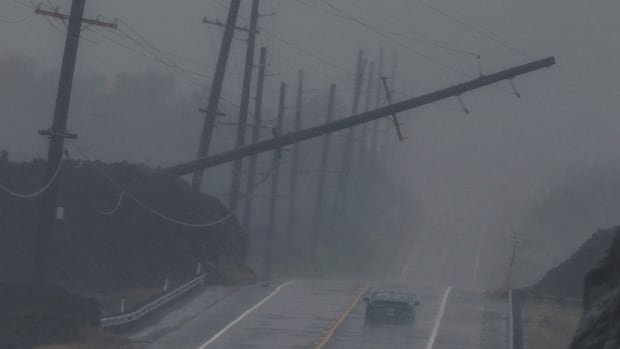

Hurricane Lala weakened to a tropical storm on Sunday, skirting Hawaii without making landfall. Despite the downgrade, the storm unleashed hurricane-force gusts and heavy rain, leading to nearly one meter of rainfall in some areas and causing torrents of water to cascade down mountain slopes.
In response to flash floods that reportedly swept away several occupied homes in Na’alehu and Wai’ohinu, a search-and-rescue operation involving Civil Defence, the National Guard, and a coast guard helicopter was initiated. Hawaii County Mayor Kimo Alameda described the challenging conditions due to rushing water, debris, and darkness.
Tragically, one person lost their life in a vehicle accident in the South Point area of the Big Island, as confirmed by Gov. Josh Green. Honolulu faced the brunt of the storm on Sunday morning, witnessing tropical storm conditions spreading westward across the island chain. The Honolulu Fire Department was actively responding to various weather-related incidents, including downed trees, blown roofs, power lines, and a swimmer rescue.
A significant portion of the state remained under a flash flood warning, with the Big Island downgraded to a flood advisory by the U.S. National Hurricane Center. Weather service meteorologist Stephen Parker highlighted concerns such as heavy rain, mudslides, downed trees, active flooding, and power lines.
As the storm persisted, over 200,000 homes and businesses were without power, with a majority on the Big Island. Additionally, three hospitals were relying on generator power for operations. The storm’s impact was evident with powerful waves pounding the coast and torrential rain causing havoc across the region.
Despite the downgrade to a tropical storm, the threat of destructive flooding and wildfires loomed over multiple islands under tropical storm warnings. As of the latest advisory, Lala maintained sustained winds of 100 km/h and was moving west-northwest. Forecasters indicated the storm’s intensity might remain steady through Monday, with a potential to regain hurricane status by midweek.
Areas like the Big Island, especially those near Mauna Kea, faced significant rainfall, posing risks of landslides and structural damage. With prior experiences of devastating floods in March, residents took precautionary measures, including seeking shelter and securing livestock.
The aftermath of the storm left a trail of destruction, impacting businesses like the Punalu’u Bake Shop and causing widespread power outages. Residents like Kate McLellan on Oahu’s North Shore were on edge, awaiting the storm’s full force. McLellan acknowledged the improved preparation and communication from authorities during the storm, which provided a sense of reassurance amid the challenging conditions.