


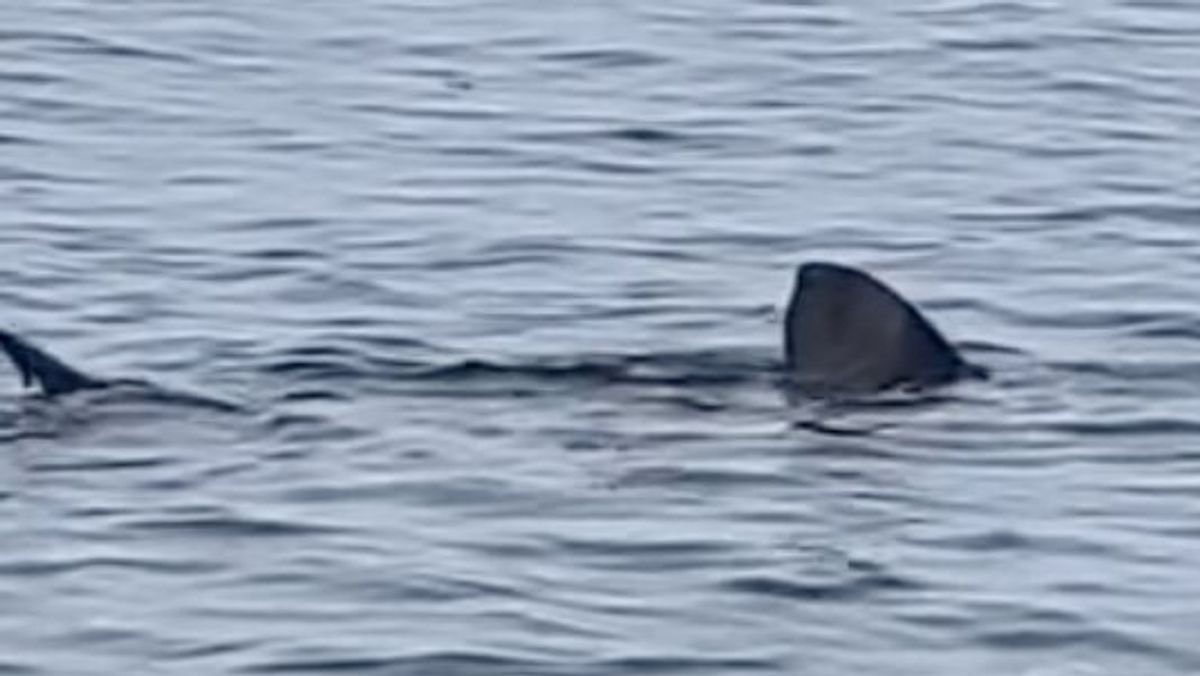

An immense shark has been sighted patrolling the waters just off the British Isles coastline. Video footage of the colossal creature captures it gliding just below the surface near Peel on the Isle of Man.
One striking video shows a massive dorsal fin cutting through the water, while another records the giant shark approaching sightseers on a boat. Despite its intimidating appearance, the giant fish was identified as a harmless basking shark. Nicholas Lewis from Casey J Fishing Trips mentioned, “It’s been years since we’ve seen so many basking sharks. They were 25 feet long. It can be challenging to estimate, but when they’re close to the boat, you can tell.”
Basking sharks rank as the second-largest fish globally, only surpassed by the whale shark. They are among the few shark species that feed on plankton, alongside the whale shark and the elusive megamouth shark. These gentle giants are often spotted swimming individually or in small groups, leisurely moving through coastal waters with their mouths wide open for filter-feeding.
Despite their massive size and scary appearance, basking sharks do not pose any threat to humans. The Isle of Man has recently gained recognition as a prominent spot for basking sharks, with numerous sightings reported annually. It is estimated that at least 90 individually identified sharks reside in these waters, which seem to serve as a breeding area for these gentle giants.
The Isle of Man has a history of basking shark research. The Basking Shark Project, led by Ken Watterson in the 1980s and 1990s with support from local volunteers, conducted research and raised awareness about basking sharks. This initiative significantly boosted the global visibility of basking sharks and influenced the government to include them in the protected species lists in the Isle of Man and the UK.
Typically measuring around 25 feet long, basking sharks can reach up to 40 feet in length. These slow-moving creatures can weigh up to six tonnes and filter approximately 2,000 tonnes of seawater per hour through their massive mouths.
Numerous accounts of sea serpents and monsters are believed to have stemmed from basking shark sightings. In a notable incident, Japanese fishermen initially mistook a basking shark carcass for the remains of a prehistoric plesiosaurus.