


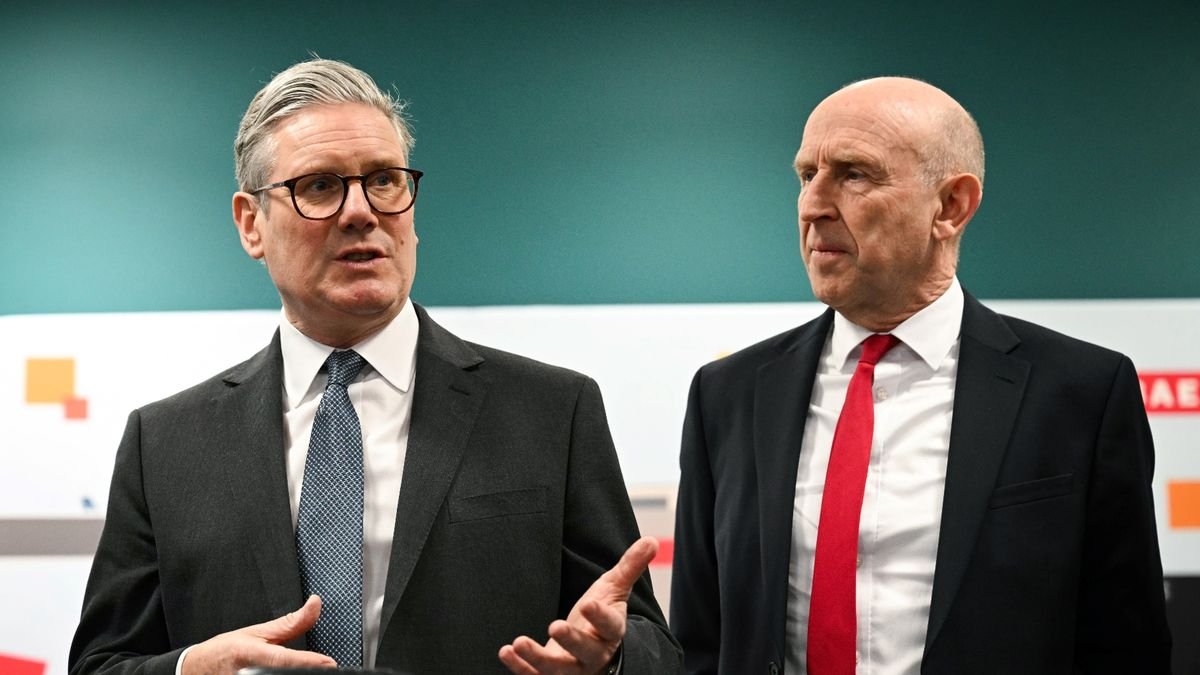

Keir Starmer’s administration faced upheaval as two esteemed defense ministers resigned, delivering scathing critiques of military spending plans. The Prime Minister suffered a significant setback with the unexpected departure of Defence Secretary John Healey, sparking a crisis within the Ministry of Defence. Shortly thereafter, Al Carns, a former Royal Marine and Armed Forces Minister, also resigned, citing insufficient defense funding. Ministerial aides Pamela Nash and Rachel Hopkins also tendered their resignations. Tensions escalated among ministers regarding the delayed Defense Investment Plan (DIP), which is already six months behind schedule. Healey’s resignation letter accused the Prime Minister of failing to confront the Treasury’s reluctance to allocate necessary defense funds.
Business Secretary Peter Kyle assured on Friday that the DIP is not in disarray but is actively being developed. He emphasized the complexity of increasing defense spending to modernize defense strategies while supporting British employment. Starmer pledged to unveil the plan by the NATO summit in July.
Starmer vowed to implement a substantial increase in defense spending after Healey’s resignation earlier in the day. He criticized the delayed military investment plans for jeopardizing national security. A ministerial aide in the Ministry of Defence also resigned following Healey’s departure.
In response to Healey’s resignation, Starmer defended the government’s commitment to defense spending, asserting that the DIP will provide essential resources for national security. He emphasized responsible and sustainable spending increases to support the military adequately.
Chancellor Rachel Reeves acknowledged the economic impact of the Middle East conflict, stating that the government’s economic plan is resilient to cope with associated costs. The UK economy contracted by 0.1% in April, according to the Office for National Statistics.
Business Secretary Peter Kyle voiced support for Starmer’s defense spending initiatives, underscoring the need for responsible funding to drive economic growth. He praised Starmer’s leadership in navigating challenging decisions on defense expenditure.
Dan Jarvis was appointed as the new Defense Secretary following Healey’s resignation, bringing stability to the Ministry of Defence after the crisis triggered by Healey and Carns’ resignations. Jarvis assumed the top Cabinet post to address concerns raised by the departing ministers regarding defense funding inadequacies.
Overall, the government is facing internal turmoil over defense spending plans, with ministers resigning over disagreements on funding allocations. Starmer’s commitment to enhancing defense capabilities amidst financial constraints remains a focal point of the ongoing crisis.