


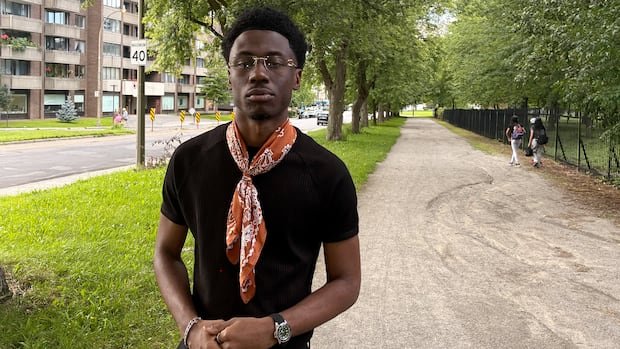

Jonathan Likongo, a student at Université de Montréal, made the decision to extend his stay in Canada this summer instead of returning to Kinshasa, where his family resides. This choice was prompted by concerns that leaving Canada could pose challenges for his re-entry. Likongo expressed that although he had planned to travel back, he erred on the side of caution. This decision turned out to be advantageous.
In response to the Ebola outbreak, Canada implemented temporary restrictions in May, limiting entry for specific foreign nationals from various central African countries. Subsequently, in July, Canada announced that it would deny entry to foreign nationals who had visited the Democratic Republic of Congo (D.R.C.) within the preceding 21 days. These measures are scheduled to be in effect until August 29.
According to Likongo, who is a member of the Congolese Students’ Association at Université de Montréal, the timing of these restrictions has been challenging for students who had intended to travel during the summer break. He highlighted that the unexpected nature of the restrictions caught many off guard.
Impact on Students
Several universities in Quebec have reported that a significant number of students could be affected by these measures, including those already enrolled in programs and those set to commence their studies in the upcoming fall semester.
For instance, Université de Montréal disclosed that 170 students from the D.R.C. or Sudan have been admitted for the fall semester, with an additional 182 individuals from these countries already enrolled in programs during the winter or summer terms. Université Laval indicated that they have 240 students from the D.R.C., South Sudan, and Uganda, comprising 72 new students and 168 continuing ones. Université du Québec à Montréal mentioned that around 100 students are facing the consequences of these restrictions.
The universities are actively collaborating with students to navigate through this situation and explore various solutions. At Université de Montréal, undergraduate students have the option to modify their registration until August 29, while graduate students can delay the start of their program for up to one year. Université Laval is offering individual assessments to students, providing choices like deferring admission, remote learning options, or delayed arrival for the semester. Université du Québec à Montréal is also evaluating tailored solutions for affected students.
Anticipating the Future
Students currently outside Canada are eagerly awaiting updates on what will unfold after August 29. Health Canada conveyed that they are closely monitoring the Ebola situation, continuously evaluating the measures in place in collaboration with international partners. The government will decide on the next course of action before the potential expiration of the existing measures.
For Likongo and other students in similar circumstances, the uncertainty has led to missed opportunities to reunite with their families. Likongo expressed the disappointment of not being able to see his family this summer in Kinshasa and remains hopeful for a swift resolution to the situation.