


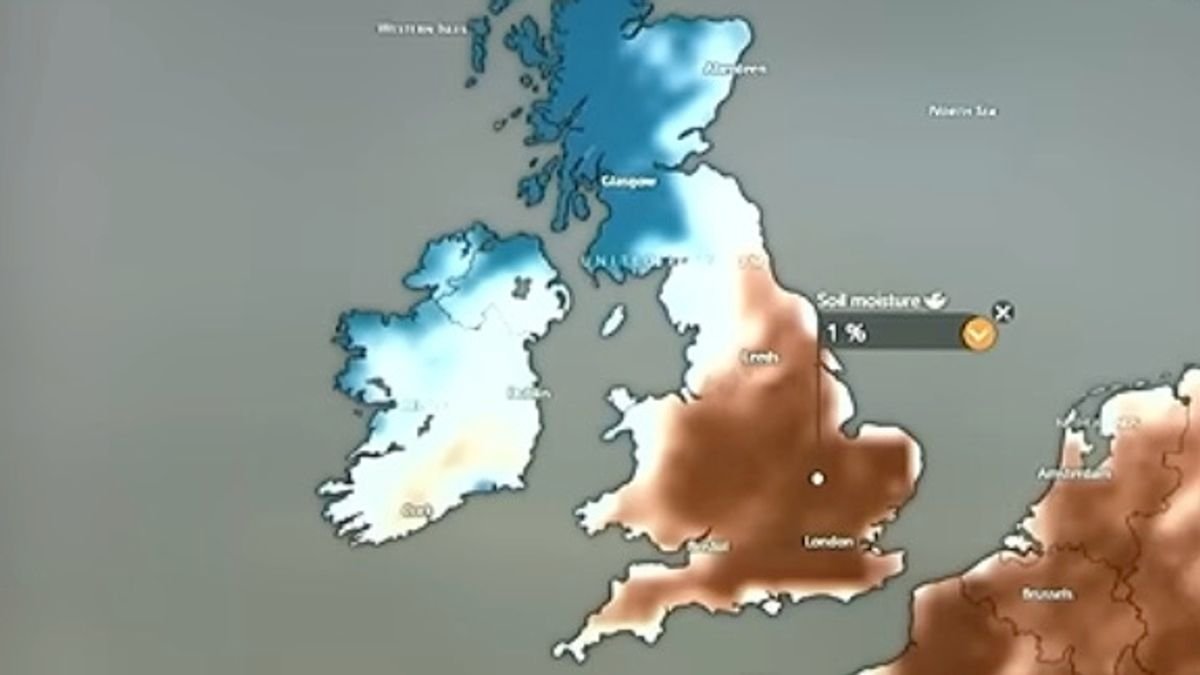

Britain is facing a severe drought situation as indicated by recent weather maps revealing a significant lack of rainfall across the nation. Official reports confirm that half of England is currently experiencing drought conditions due to minimal rainfall recorded in July. Although northern regions have received some rain recently, the Southeast of England remains the most affected area with forecasts predicting continued dry and hot weather.
New data from the Met Office reveals that last month saw a 65% decrease in average rainfall across the UK, leading to reduced soil moisture levels. This has had detrimental effects on farming activities nationwide, with some areas in the East and Southeast of England reporting soil moisture levels as low as 1%.
Soil moisture is crucial for plant growth and agriculture, with the ideal level typically around 30%. Meteorologist Aidan McGovern expressed concern over the lack of rain, emphasizing the negative impact on plant life and wildlife due to the current soil moisture deficiency.
Southern England experienced its driest month on record, with only 3% of the long-term average rainfall received. Conversely, the far north of Scotland received 69% of its average rainfall, benefiting from more varied weather conditions.
Farmers have raised alarm over potential food shortages and price increases for staple crops like wheat, barley, and potatoes following the unprecedented summer harvest. The National Farmers’ Union president highlighted the need for a more resilient food system in the face of changing climates worldwide.
In response to the water scarcity, hosepipe bans are enforced in the Southeast of England and East Anglia, urging residents to use water only for essential purposes to avoid water supply disruptions. Water levels in certain regions are critically low, posing risks to water availability if demand remains high.
The forecast predicts showers in the Northeast of England but not sufficient to alleviate soil moisture deficiencies. Additionally, temperatures are expected to rise next week, with temperatures reaching 35C in the East and Southeast of England.
Efforts to conserve water resources are ongoing, emphasizing the importance of using water wisely to prevent sudden water shortages.