


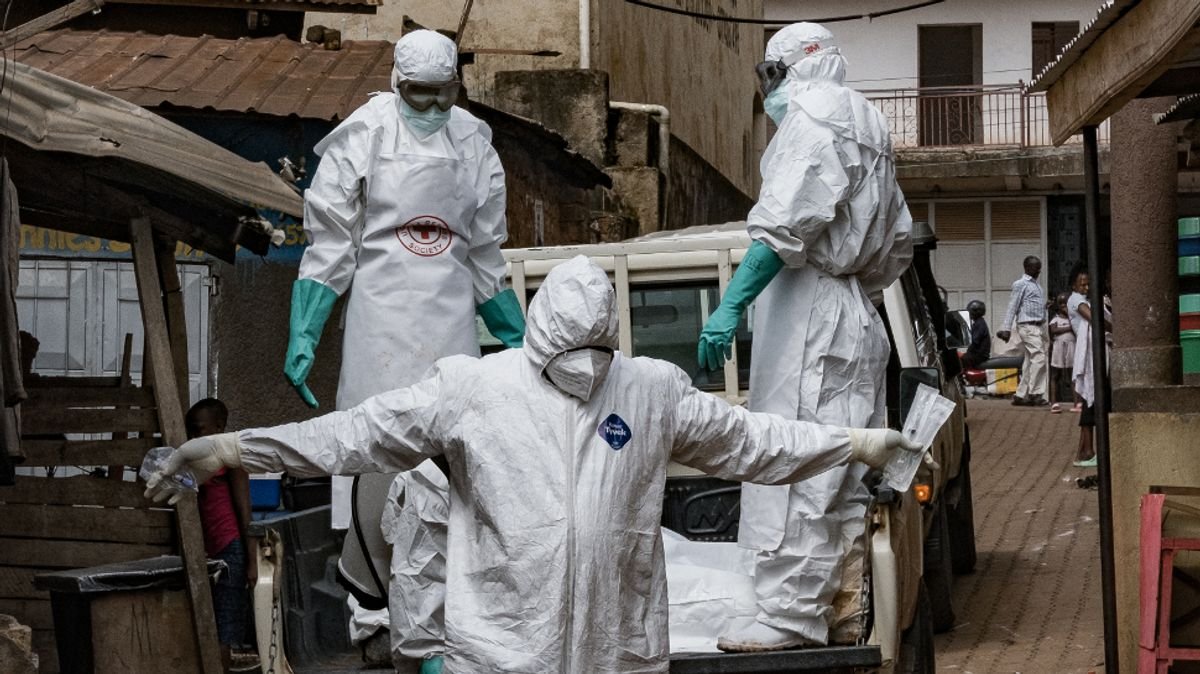

A recent Ebola outbreak in the Democratic Republic of Congo (DRC) may have started as early as January, according to local officials. They have linked the spread of the deadly virus back to a patient zero at the beginning of the year. The information about the outbreak was not shared with international NGOs until last week, raising concerns about the delay in notification.
The initial case, known as patient zero, sought treatment at a hospital in Rwampara village in eastern DRC in late January and unfortunately succumbed to the virus in February. This patient reportedly infected eight healthcare workers before passing away. Subsequently, there have been over 1,000 suspected cases and 223 deaths attributed to this particular strain of Ebola, with additional cases occurring in neighboring Uganda.
The delayed disclosure of the outbreak has allowed the virus to spread unchecked for several months. This Ebola incident is now considered the third-largest outbreak on record and was officially acknowledged by the Congolese Ministry of Health in mid-May. The World Health Organization (WHO) had originally identified a healthcare worker in Bunia as the first case, but the latest information suggests otherwise.
International health organizations like the International Rescue Committee (IRC), Action Aid, and Médecins Sans Frontières (MSF) have been informed of the situation. Concerns have been raised about the significant underreporting of cases and contacts, hindering containment efforts. The outbreak’s impact is exacerbated by challenges such as security issues, community distrust, and logistical difficulties.
The region’s volatile conditions, including ongoing conflicts and mass displacement, have further complicated response efforts. WHO Director-General Tedros Adhanom Ghebreyesus emphasized the need for increased international support to combat the virus effectively. Funding shortages have hampered the provision of essential supplies and services, highlighting the critical need for additional resources.
Efforts to contain the outbreak, including contact tracing and establishing treatment facilities, require immediate financial assistance. While some contributions have been made, critics argue that more substantial support is necessary to address the escalating crisis. Previous reductions in aid funding by Western nations have weakened global health systems, leaving countries like the DRC vulnerable to health emergencies like the current Ebola outbreak.