


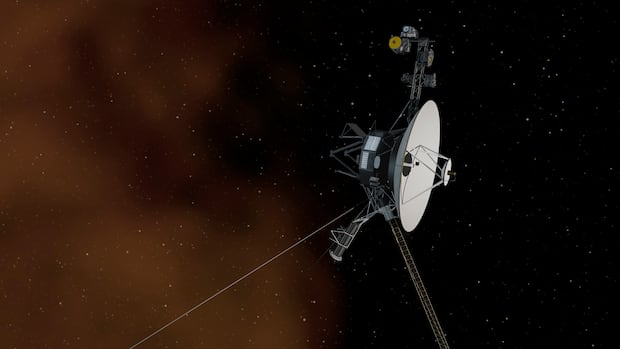

Reaching its current position has taken nearly five decades for Voyager 1, yet light traverses that distance in just one day.
This latest achievement marks 16 billion miles — to be exact — that the spacecraft has successfully covered.
“This signifies that light or radio waves from Earth take a complete day to reach Voyager,” explained Jason Rhodes, the lead scientist for astrophysics, heliophysics, and fundamental physics at NASA’s Jet Propulsion Laboratory.
“It also means it takes another full day for signals from Voyager to return to Earth.”
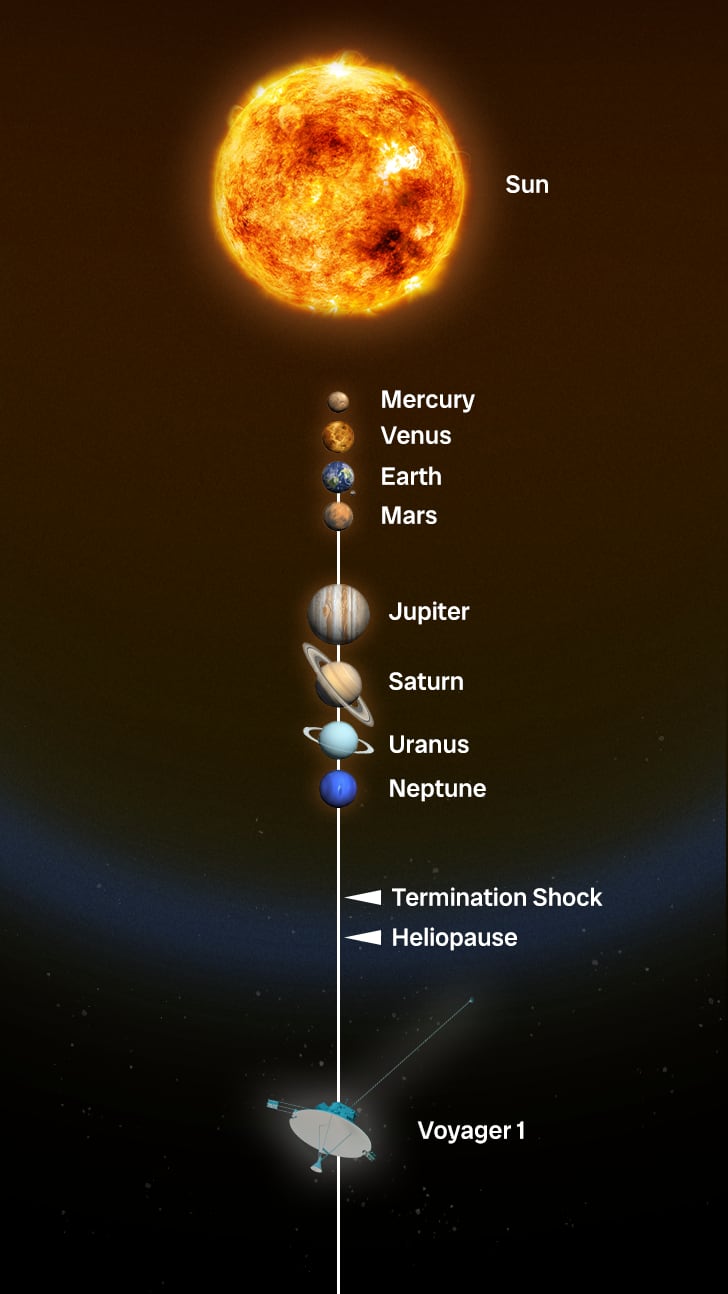
Although not to scale, Voyager 1 has traveled an incredible distance in almost 50 years. (CBC)
Voyager 1 was launched in 1977 to explore the gas giants of the solar system, namely Jupiter and Saturn. However, by 1998, it had surpassed these planets, becoming the most distant human-made object ever created. In 2012, it entered interstellar space — the area just beyond the sun’s magnetic reach known as the heliopause — at a distance of 18 billion kilometers. Today, it has traveled over 26 billion kilometers.
“Discussing these vast distances emphasizes just how immense space truly is,” stated Bethany Downer, who is a member of the communications team for the Hubble and James Webb space telescopes, “and it’s remarkable that something relatively small that we created continues to operate indefinitely.”
-
Are we alone? Institute searching for alien signals is using a new way to answer that age-old question
-
A spacewalk to remember: Canadian astronaut Joshua Kutryk says seeing Earth ‘changed’ him
Still operational, still communicating
While being a “light day” away may seem like an arbitrary milestone, as there is no new physical boundary or change in Voyager 1, experts regard it as significant because the spacecraft continues its mission and maintains communication with Earth.
“It’s not functioning as frequently as it once did. Many of its scientific instruments are no longer active,” Downer noted.
The spacecraft generates power through the heat produced by the natural decay of plutonium. Over the years, as this energy has diminished, most scientific instruments have been deactivated, with the latest being the LCEP, which monitored low-energy charged particles. Currently, two instruments remain operational, one for detecting plasma waves and the other for measuring magnetic fields.
“This provides valuable insights into star formation and shows that the space between stars is not just void but filled with fascinating particles and physics that we previously understood poorly until Voyager,” Rhodes stated to CBC News from Pasadena, California.
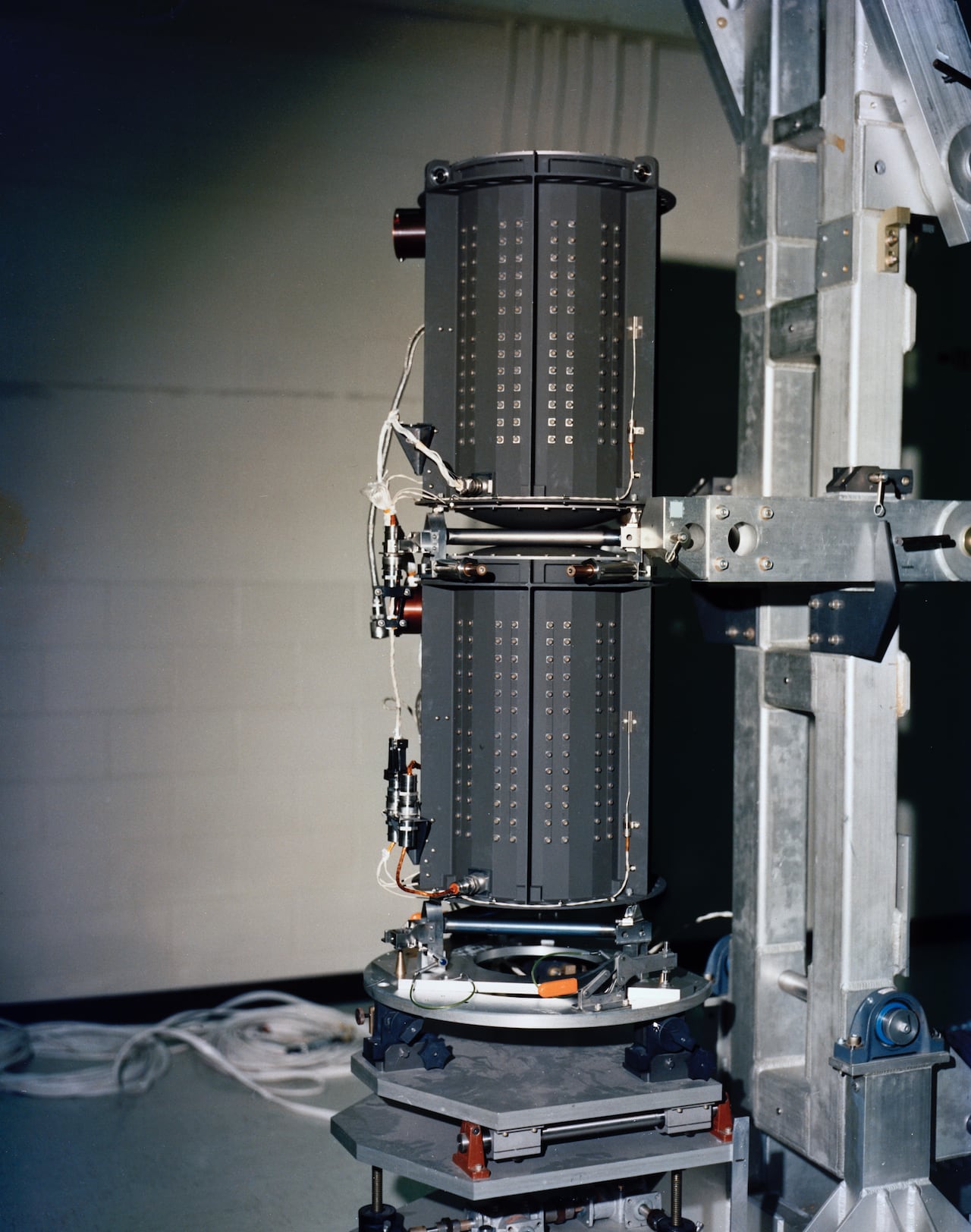
NASA’s Voyager probes are equipped with three radioisotope thermoelectric generators (RTGs), such as the one shown here. These RTGs convert the heat from plutonium-238 decay into electricity to power the spacecraft. (NASA/JPL-Caltech)
These instruments transmit data back to Earth through the deep space network, which comprises antennas located at various sites around the globe, designed to maintain continuous contact with spacecraft. Although the signals from Voyager 1 are weak, there remains an important message that we are eager to receive.
“The most crucial message is: ‘I’m still powered on, I’m still operational,’” Downer shared with CBC News from St. John’s.
Active but never absent
NASA anticipates that Voyager 1 (along with its counterpart Voyager 2, launched the same year but on a different trajectory) will be able to continue sending messages for another ten years. However, Rhodes notes that there is no definitive endpoint as teams work on energy-saving strategies to prolong operations.
Even without power, their missions won’t conclude.
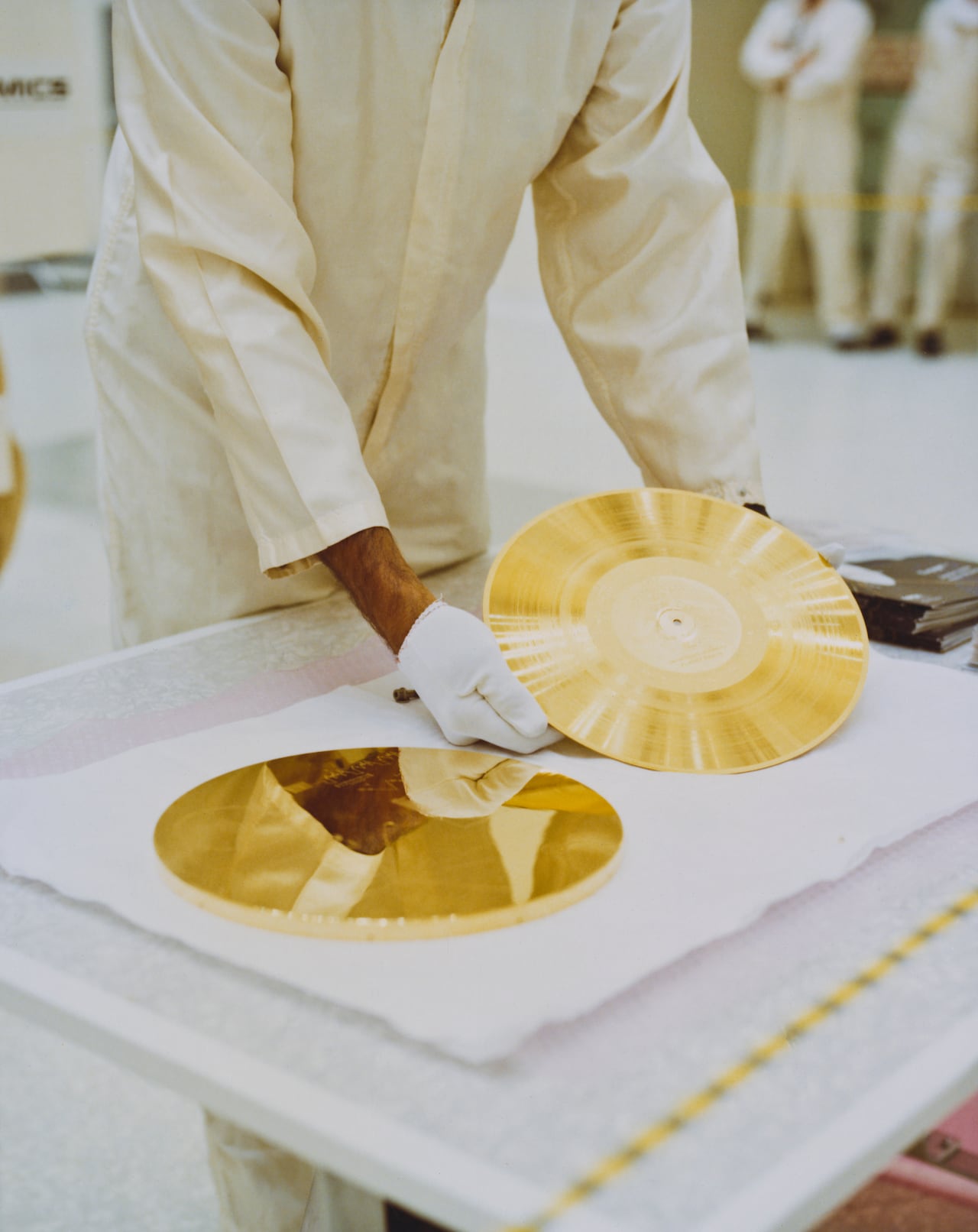
Both Voyager spacecraft carry a special payload that encapsulates a snapshot of life and culture on Earth. (NASA/Hulton Archive/Getty Images)
“Each carries a golden record,” Rhodes explained, “crafted from gold, a metal that resists tarnishing, rusting, or decay.”
Essentially a time capsule, these golden records encompass a variety of sounds from humanity, including greetings in 55 languages, music, and natural sounds from Earth, such as thunder and the songs of humpback whales.
For those curious about how to play it, instructions are included. If you’re wondering who might listen to it, they would need to think similarly to us.
Additionally, Downer mentioned that they include a Morse code message: “Ad astra per aspera,” translating to “To the stars, through hardships.”
As Voyager 1 continues its long journey, it has already imparted profound knowledge regarding our solar system, offering insights about ourselves, particularly from a photograph taken in 1990 from a distance of six billion kilometers.

The Pale Blue Dot is a photograph of Earth taken Feb. 14, 1990, by NASA’s Voyager 1 at a distance of 3.7 billion miles (6 billion kilometers) from the Sun. (NASA/JPL-Caltech)
Dubbed the Pale Blue Dot, this image presents Earth as a diminutive dot illuminated by a ray of light. Captured at the behest of American astronomer Carl Sagan, the significance of our apparent insignificance was immortalized in his book of the same title.
“Reflect on that dot once more. That’s here. That’s home. That’s us.”