



Supersonic jets are on the verge of a resurgence following a significant move by the US to lift a 50-year prohibition. The Trump administration asserts that advancements in technology now allow aircraft to surpass the speed of sound without creating disruptive sonic booms.
Since 1973, the Federal Aviation Administration has prohibited civil aircraft from exceeding Mach 1 over US territory to prevent the disturbances caused by sonic booms. The Department of Transportation plans to replace this ban with a noise threshold, allowing aircraft to fly faster than Mach 1 over land as long as the noise level remains within specified limits, as confirmed in a notice released by the FAA on June 30.
This development stems from an executive order issued by US President Donald Trump in June 2025, instructing the FAA to rescind the ban on overland supersonic flight, establish a noise-based certification standard, and eliminate regulatory obstacles hindering supersonic aviation technology in the country.
Mach 1, equivalent to the speed of sound at around 1,235 km/h (767 mph or 343 m/s) in dry air at sea level and 20 °C, serves as a benchmark. The FAA aims to finalize both regulations by mid-2027, as stated in the notice.
FAA Administrator Bryan Bedford emphasized that ongoing technological advancements will mitigate the impact of sonic booms, paving the way to lift the 1970s ban on supersonic flight over US soil while minimizing noise disturbances in communities along flight paths and near airports.
During the 1960s, aircraft flying faster than the speed of sound, approximately 660 mph at high altitudes, generated shock waves that produced loud sonic booms resembling gunshots. Extensive testing during that era revealed that these sonic booms led to broken windows, property damage, and numerous public complaints.
In a 1973 ruling, the FAA cited the technological limitations of the time to justify the prohibition aimed at safeguarding the public from sonic booms. Subsequently, Air France and British Airways introduced the Concorde, operating subsonic flights over US territory.
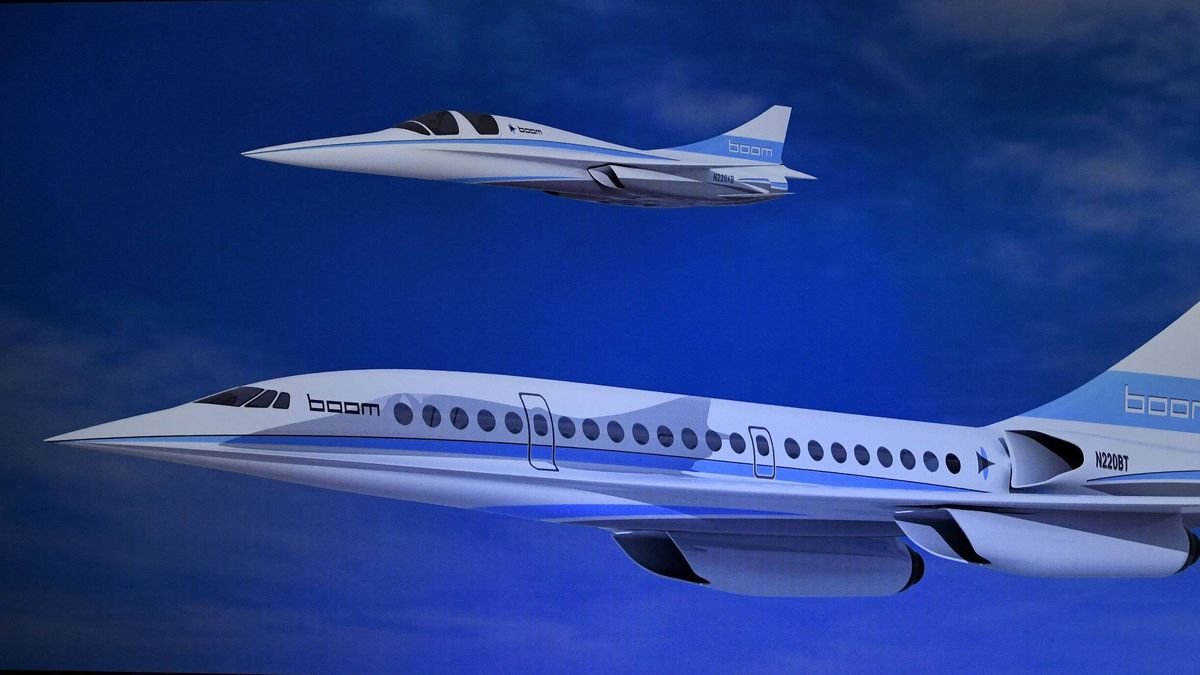
Several American companies are currently developing new luxury supersonic passenger jets with quieter sonic booms and improved fuel efficiency. Boom Supersonic, based in Colorado, has secured pre-orders from major airlines for its Overture aircraft accommodating 60-80 passengers. Meanwhile, Spike Aerospace, headquartered in Atlanta, is designing Diplomat jets capable of carrying up to 18 passengers, promising future transatlantic flights in under four hours.