


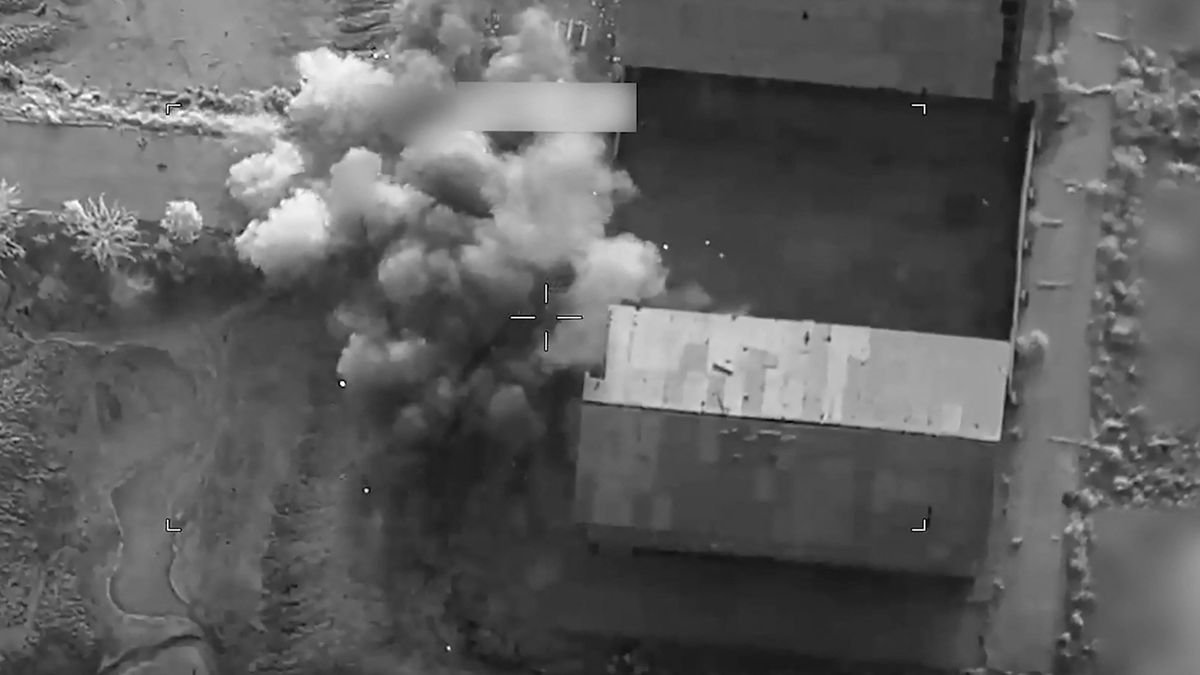

Efforts to establish peace and end the ongoing conflict between the US and Iran have been shattered by a series of intense missile exchanges, raising concerns of a broader conflict in the Middle East.
Over 30 individuals have lost their lives and hundreds have been wounded in US military strikes, following President Donald Trump’s declaration to target civilian infrastructure in order to resolve the crisis in the Strait of Hormuz. In the latest round of airstrikes, American forces conducted a 90-minute assault on the cities of Sirik and Bandar Abbas.
The US Central Command stated that the recent attacks were specifically aimed at diminishing Iran’s ability to disrupt commercial shipping in the Strait of Hormuz. The escalation was authorized by Trump after international vessels in the region were targeted by Iran’s Islamic Revolutionary Guard Corps. Jordan, Kuwait, and Bahrain were among the nations affected by the IRGC’s actions, with Bahrain confirming the interception and destruction of Iranian airstrikes.
The IRGC of Iran reported launching attacks on US Fifth Fleet military installations in Bahrain and the Al-Azraq base in Jordan. Multiple drone operations have been carried out by Iran against US military bases in the Gulf region since the ceasefire was broken.
The US has positioned two aircraft carriers and 19 battleships in the Arabian Sea near Iran, prepared for further military actions. Trump issued a warning that Iran’s civilian infrastructure would face severe consequences if Tehran does not engage in peace negotiations, threatening strikes on power plants and bridges in the coming week.
Iran has criticized the UK’s decision to label the IRGC as a terrorist organization, stating that Britain will bear political, legal, and diplomatic repercussions. Iran’s Foreign Ministry denounced the move as unjustified and irresponsible, citing violations of international law. The ministry asserted Iran’s right to take appropriate countermeasures in response to what it deemed as the UK’s unwarranted action.