


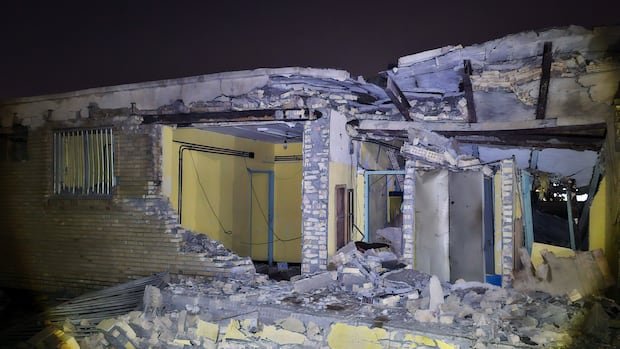

Iran and neighboring Arab countries engaged in a significant military confrontation on Wednesday, marking the most intense clash between Tehran and Washington since July. U.S. forces launched strikes on Iran’s southern coastline, prompting retaliatory fire from Iran targeting American bases throughout the region.
The United States threatened further destructive attacks, while Iran accused Washington of hitting a wedding ceremony, resulting in 18 fatalities and 108 injuries from the recent U.S. assaults. Following the renewed U.S. airstrikes, Asian and European stock markets experienced declines, with oil prices surging to levels not seen since July. This escalation compounded the economic impact of disrupted energy supplies, contributing to global inflation amid a bond market sell-off.
The U.S. military’s Central Command reported targeting Islamic Revolutionary Guard Corps air defenses, maritime assets, mine-laying capabilities, and communication sites. Iranian media confirmed strikes on multiple locations near the strategic Strait of Hormuz, a crucial waterway where Tehran had previously threatened tanker traffic.
Residents in the affected area, such as Mahmoud, a municipal worker in Sirik County, described the attacks as apocalyptic. President Donald Trump characterized the U.S. strike on Iran as severe, contrasting it with what he termed Iran’s minimal response.
Iran retaliated by striking alleged U.S. assets in Bahrain, Jordan, Kuwait, and Iraq, with the objective of expelling U.S. forces from their extensive network of military installations across the Middle East. Iranian military authorities warned of intensified responses to American aggression and its consequences for collaborating nations.
In Kuwait, Iran claimed responsibility for a missile and drone attack on the U.S. Ali Al Salem Air Base, targeting a U.S. commander’s residence. Other countries in the region, including Qatar and Bahrain, attributed attacks to Iran and intercepted Iranian drones. Additionally, Iran reported incidents involving tankers struck by mines while under U.S. guidance in the Strait of Hormuz.
Despite Iranian actions, the U.S. affirmed its commitment to safeguarding passage through the strait, facilitating the transit of millions of barrels of oil. Iran expanded its list of blacklisted vessels, indicating potential penalties if ships attempted to navigate the strait without Iranian approval.
President Trump reiterated that the strait, a vital conduit for global oil shipments, remained open under U.S. supervision. The recent events have heightened tension in the region, with fears of a resumption of full-scale conflict among Iranian residents enduring the impact of prolonged hostilities.
The exchange of fire marked the most severe confrontation since July, with both sides facing resource constraints and strategic challenges. Despite the conflict’s toll on Iran’s economy and military capabilities, Trump expressed confidence in achieving his objectives. Treasury Secretary Scott Bessent disclosed plans to expand economic pressure on Iran, including targeting airlines, maritime industries, and digital assets.
While efforts are underway to contain the conflict to avoid negative repercussions on domestic politics, Iran aims to emerge stronger post-war, seeking relief from sanctions, access to blocked funds, and increased control over the vital Strait of Hormuz.