





Celebrating its centenary, the two-day weekend is sparking discussions on restructuring the modern calendar.
Grace Tallon, co-founder of Work Time Revolution in Toronto, emphasizes the need for revisiting workweek standards, considering the significant societal changes since the establishment of the two-day weekend a century ago.
Labor experts and advocates stress the evolution of the weekend as a man-made concept open to further adaptations.

Grace Tallon, co-founder of Work Time Revolution, highlights the significant shifts in work and lifestyle dynamics necessitating a reevaluation of the traditional workweek structure. (Submitted by Grace Tallon)
The Emergence of the Two-Day Weekend
Historically, the workweek consisted of extended hours, with a standard six-day schedule prevailing during the late 19th and early 20th centuries.
Craig Heron, a labor historian, highlights the progression from a six-day workweek to the introduction of the two-day weekend, citing the influence of labor movements and key figures such as Henry Ford.
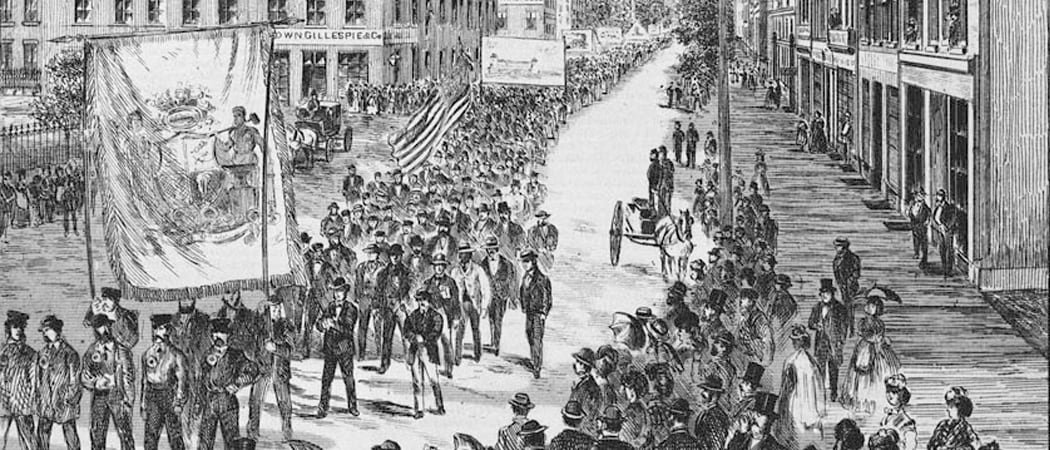
An illustration depicting the Nine-Hour Movement’s impact on labor reforms and the transition to shorter workdays in Canada. (Canadian Illustrated News/Library and Archives Canada)
Ford’s adoption of a five-day workweek in 1926 marked a pivotal shift in work schedules, influencing subsequent labor practices and legislative changes.
The transition to a standardized two-day weekend took time to gain widespread acceptance, evolving gradually through initiatives by labor unions and governmental interventions.

Positive outcomes observed in workplaces implementing reduced work hours while maintaining productivity, as demonstrated by the non-profit 4-Day Week Global’s initiatives. (T