


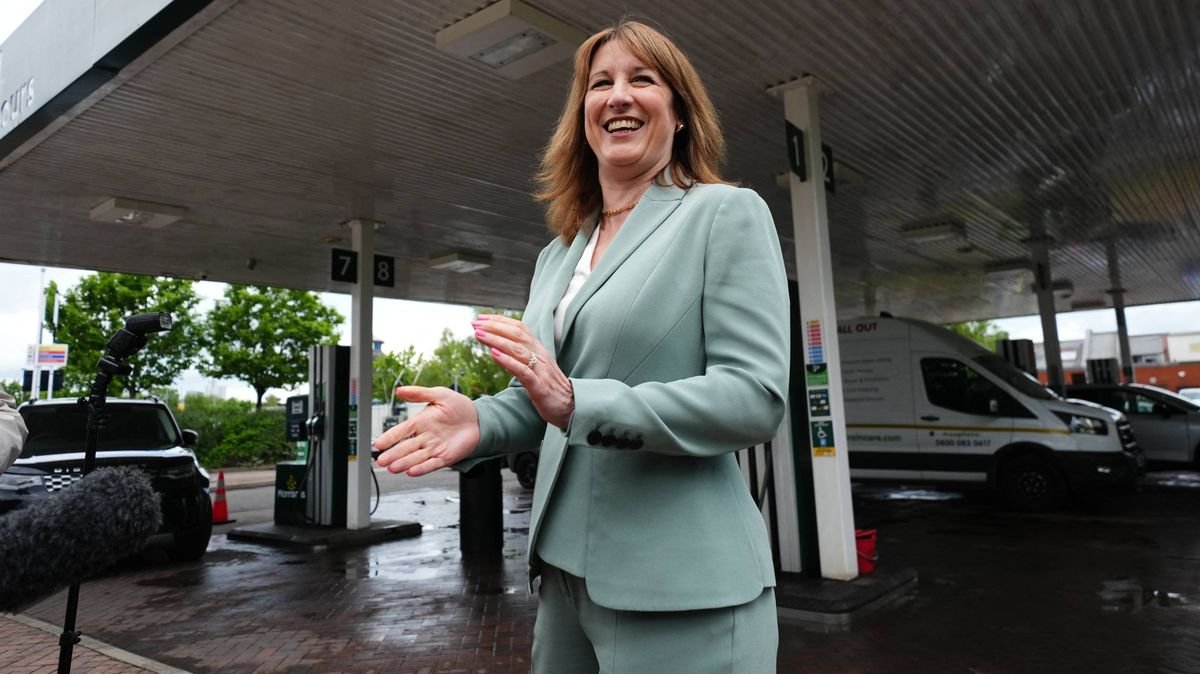

Chancellor Rachel Reeves attributed the downturn in the UK economy in April to the repercussions of the ongoing conflict in the Middle East. According to the Office for National Statistics, the country experienced a 0.1% decrease in gross domestic product (GDP) compared to the growth of 0.3% in March and 0.4% in February.
Reeves emphasized that prior to the Middle East conflict, the economy was performing better than expected with decreasing inflation rates. Despite not actively participating in the war, its effects are being felt domestically. She expressed confidence in the government’s economic strategy, noting endorsements from the International Monetary Fund (IMF) and the Organisation for Economic Co-operation and Development (OECD) regarding growth forecasts.
The economic decline was primarily driven by a 0.2% drop in services, offset partially by a 0.1% increase in construction and 0.4% growth in manufacturing. Over the three-month period leading up to April, the economy expanded by 0.7%.
The services sector, crucial to the economy, suffered a setback, particularly in arts, entertainment, and recreation, witnessing a 4.3% decline, including a significant 9.1% contraction in the sports industry due to cancellations of sporting events in the Middle East conflict.
This economic downturn is mirrored in various sectors, evident from recent retail data showing a sharp decline in sales, particularly in fuel sales due to soaring petrol and diesel prices.
Market expectations suggest that the Bank of England will maintain its base rate at 3.75% in its upcoming Monetary Policy Committee meeting. Analysts project a continued hold on interest rates amidst a weakening labor market and a challenging economic outlook.
Despite a strong start in the first quarter of the year with a 0.6% GDP growth, experts anticipate a gradual decline in growth throughout the remainder of 2026. The impact of the conflict in the Middle East and rising costs is leading to a strain on households and businesses, prompting calls for government intervention to alleviate the financial burden on the public.
Economists foresee a slowdown in growth in the upcoming quarters, with concerns raised about a potential recession looming. Rising household expenses and uncertainties in the job market are expected to constrain consumer spending, while businesses may delay investment decisions due to elevated costs and geopolitical uncertainties.