


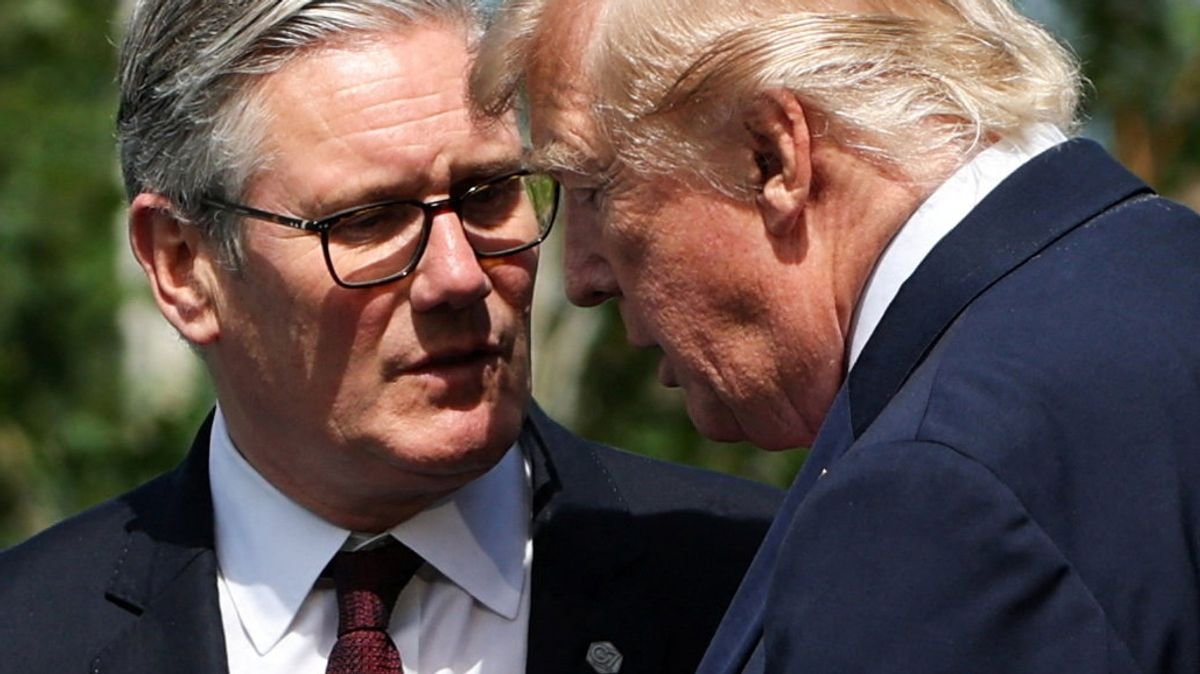

Former US President Donald Trump took a final swipe at UK Prime Minister Keir Starmer today, reflecting lingering animosity from their disagreement over Iran. Their once-friendly rapport soured when the UK rejected American requests to conduct military strikes on Iran from British bases. Trump, feeling personally slighted, criticized Starmer, likening him unfavorably to Winston Churchill. Amid growing speculation about Starmer’s political future, Trump proclaimed on Truth Social that Keir Starmer would step down as the UK Prime Minister.
In a critical assessment, Trump lambasted Starmer for what he perceived as failures in immigration and energy policies, particularly advocating for the resumption of North Sea oil drilling. Trump’s opposition to the UK’s suspension of drilling licenses in the North Sea is partly driven by potential benefits for US companies seeking licenses. Additionally, his longstanding opposition to wind farms, triggered by Scottish wind turbines near his golf course in Aberdeen, plays a role in his stance on the issue. Notably, Starmer’s stance on North Sea oil drilling has not significantly impacted his standing in public opinion polls.
Official sources from Downing Street refrained from providing comments on the matter.
In a separate online post, Trump issued a warning directed at Iran, urging the nation to control Hezbollah’s actions to avoid severe consequences. Trump’s message from Camp David hinted at potential harsh actions against Iran, echoing recent military actions. Meanwhile, Vice President JD Vance was in Switzerland overseeing discussions to solidify the recent Memorandum of Understanding with Iran into a lasting peace agreement, emphasizing the pivotal moment in Middle Eastern relations.
Vance, ahead of the talks dubbed the “Lake Lucerne Summit,” pondered the potential for lasting positive change in Middle Eastern dynamics. He questioned whether a new era of cooperation could emerge or if past practices would resurface, acknowledging the uncertainty of Iranian involvement during his statements.