


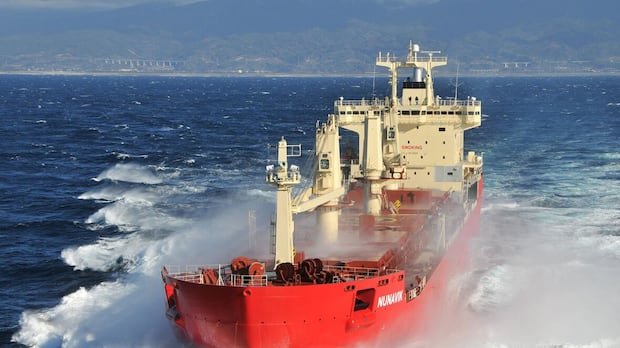

Premier Wab Kinew estimates that constructing a Port of Churchill expansion with an offshore liquefied natural gas terminal in Hudson Bay will require an investment of $70 to $80 billion. Recent studies indicate that ice-hardened freighters could navigate Hudson Bay beyond the current four-month Port of Churchill shipping season. However, the studies caution that fully loaded natural gas tankers, designed to withstand sea ice, would face challenges maneuvering within the shallow and narrow entrance of the existing port.
According to a feasibility study commissioned by Arctic Gateway Group, significant dredging and infrastructure modifications or the development of an offshore loading facility would be necessary before utilizing such vessels at Churchill. The construction of a liquefied natural gas terminal at Kitimat, B.C., cost $40 billion over 12 years, located at the end of a sheltered inlet draining into the Pacific Ocean.
Kinew expressed optimism following new research indicating the feasibility of shipping liquefied natural gas through icy waters, downplaying concerns about environmental impacts compared to oil shipments in Hudson Bay. The studies suggested that current technology could support year-round shipping in Churchill using ice-hardened vessels, albeit with ongoing challenges posed by ice conditions in the bay, especially under projected global warming scenarios.
Arctic Gateway Group, in partnership with Fednav, explored the requirements for enabling year-round shipping at the Port of Churchill. Their study concluded that utilizing ice-hardened freighters could extend the shipping season immediately, with potential for year-round access in the future. However, Fednav cautioned about the dynamic ice environment of Hudson Bay and the navigational difficulties in the port’s approach.
Further research, including field studies and simulation-based assessments, is recommended to support decisions on extended-season or year-round shipping. The cost estimates for ice-hardened vessels range from $100 million to $410 million, significantly less than specialized icebreakers for traversing Arctic Ocean ice.
Despite advancements, the presence of sea ice in Hudson Bay may persist, especially with projected global temperature increases. Kinew plans to pitch the Port of Churchill expansion to investors in Toronto, emphasizing the current feasibility of year-round operations and the potential for affordable shipping solutions.
Arctic Gateway Group’s expansion plans also involve upgrading the Hudson Bay Railway and enhancing storage and loading facilities at the port. While uncertainties remain, the focus is on attracting investment and ensuring realistic expectations for the sustainable development of the Port of Churchill.