


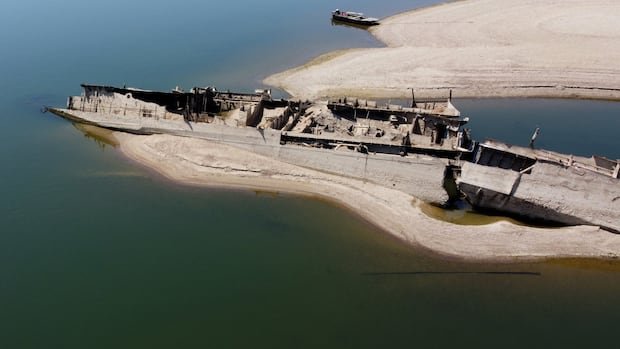

The Danube River is revealing Nazi German warships sunk during World War II as water levels drop due to the intense heat and drought affecting Europe. Another heat wave is forecast to hit western Europe, with temperatures nearing 40 C in Spain, France, and Italy. Copernicus confirmed that June and July were the hottest on record in western Europe, leading to an estimated 25,000 heat-related deaths.
The extreme heat has led to devastating wildfires and record-low water levels in vital waterways like the Danube. Climate scientists warn that fossil fuel-driven climate change is exacerbating heatwaves and droughts, impacting wildfires, agriculture, shipping, and energy systems across Europe. They emphasize that continued greenhouse gas emissions will worsen these effects.
Historians estimate that up to 200 warships were scuttled by the Nazis near Prahovo, Serbia, in 1944 to halt Soviet forces. The drying Danube has also uncovered a German military motorcycle in Hungary, an unexploded British bomb in Slovakia, and possible ancient mammoth remains in Bulgaria.
Several countries along the Danube are facing urgent concerns due to the low water levels. Governments have imposed water use restrictions for irrigation and taken steps to ensure the functioning of nuclear power plants amid the water crisis. Hungarian Prime Minister Péter Magyar stressed the need to protect natural resources in light of the heat and water shortage.
The increasing temperatures in Europe are attributed to climate change, with heat extremes and drought reinforcing each other. Scientists warn that the current conditions could worsen next year, with unprecedented global temperatures expected in 2027. The effects of climate change are already evident, and urgent action is needed to mitigate its impacts.
Overall, the drying Danube and resurfacing warships serve as a stark reminder of the escalating effects of climate change on Europe’s environment and infrastructure.