


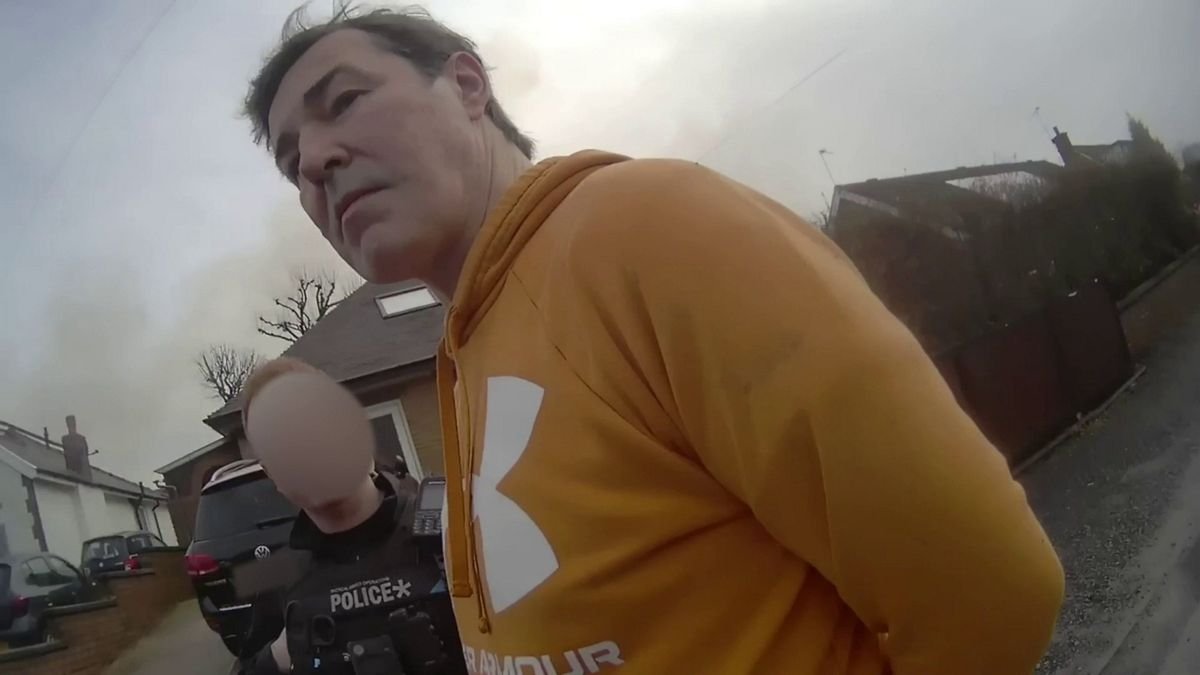

A man destroyed his childhood home in an explosion due to a mistaken belief that he was disinherited from his share of the property, a court revealed.
Darren Davies, aged 55, intentionally set fire to the four-bedroom detached bungalow worth £260,000, located in Hambleton, Lancashire, where he resided with his brother, Craig. The incident occurred following the passing of their parents in 2024. Witnesses reported a loud explosion around 9:50 am on March 27, resulting in the property being engulfed in flames and thick black smoke, as detailed in the proceedings at Preston Crown Court.
Eyewitnesses observed glass and debris being forcibly ejected during the explosion, causing severe damage to the bungalow, with the roof collapsing into the lower levels. Despite the destructive blast, Davies emerged unscathed and expressed to a passerby his belief that if he couldn’t have the house, no one else should. He also indicated suicidal intentions to neighbors, police, and paramedics who swiftly arrived at the scene. Fortunately, firefighters contained the blaze before it could spread to neighboring properties.
Investigations revealed the placement of three gas cylinders in different areas of the house, along with the presence of petrol in the loft and a lit candle. The court was informed that the fire’s origin could not be precisely determined due to its extensive damage. However, it was determined that a naked flame was applied to combustible materials, aided by an accelerant.
Davies received a sentence of four years and four months after admitting to reckless arson endangering lives. In a victim impact statement, Craig Davies clarified that their parents’ wills allocated an equal share of the bungalow to both brothers. He recounted informing Darren of his intention to sell the property and part ways, leading to Darren’s unfounded belief in a secret will favoring Craig.
Craig, who was at work during the incident, received news of the destruction through a friend’s message, causing him immense despair upon arrival at the scene. He lamented the loss of sentimental items, such as childhood diaries, family photos, and his parents’ jewelry, along with his extensive CD collection. Despite the devastation, he expressed gratitude for the community’s support.
The court acknowledged Darren’s mental health challenges, including bipolar disorder, depression, anxiety, and autism spectrum disorder. A psychiatric evaluation indicated his mental instability during the event due to an “autism crisis.” In a letter to the judge, Darren extended apologies to his family, neighbors, and the village for his actions.
His defense lawyer highlighted his progress under psychiatric care in custody, emphasizing the need for support upon release to rebuild his life. The judge recognized the severity of the case but considered Darren’s mental state and early guilty plea, resulting in a reduced level of responsibility. Davies will serve part of his sentence in custody, with the remaining period on license.
Following the sentencing, a representative from the Crown Prosecution Service expressed sympathy for the family’s enduring trauma and highlighted the irreplaceable losses suffered in the incident. The impact on Craig and other family members was described as life-altering, necessitating reliance on community compassion for support.