


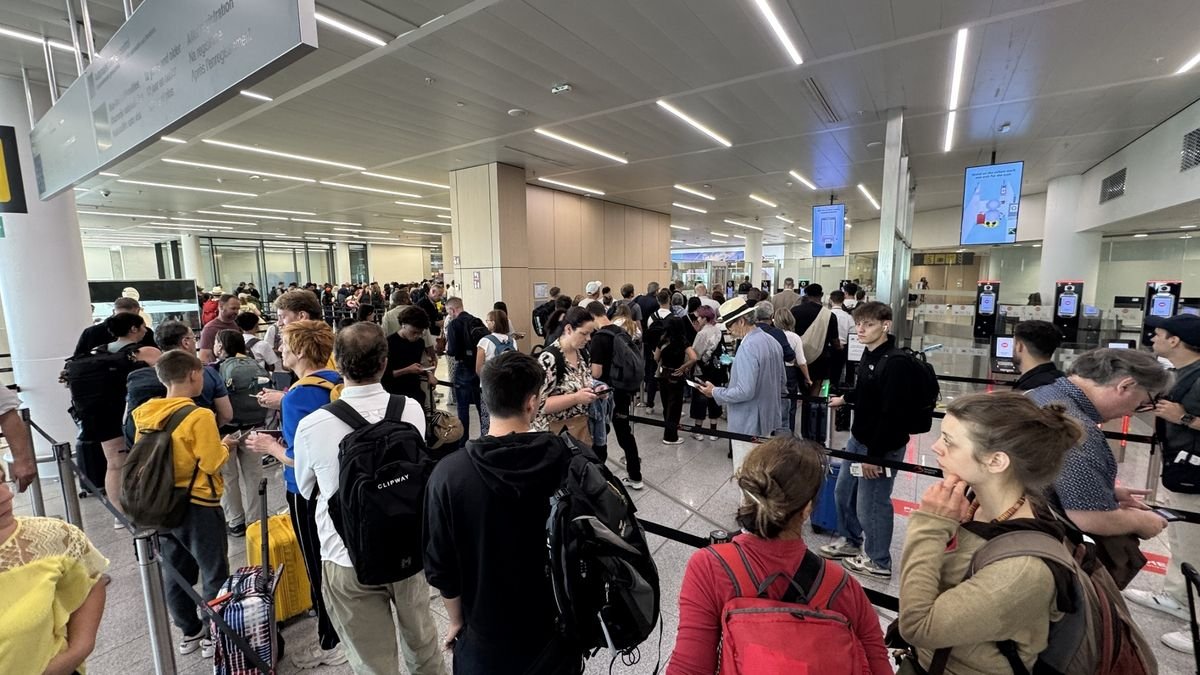

Wait times at European borders are expected to increase with the implementation of a new regulation in September. Since April, extensive queues have been observed at EU borders following the full activation of the new Entry/Exit System (EES), impacting all British individuals entering Europe.
Travelers are now required to undergo registration upon their initial entry into a Schengen country, involving the collection of their photographs and fingerprints. This process has led to significant delays at border checkpoints in European airports, resulting in prolonged waiting times and instances of missed flights.
A temporary flexibility provision that allows EU member states to halt EES checks in extraordinary situations, such as excessive queues, is set to expire on September 6. Despite appeals from industry organizations for an extension, the EU border security agency Frontex has confirmed that this flexibility will not be prolonged, potentially leading to renewed long lines at airports.
Certain airports have encountered challenges with the EES technology, necessitating system reboots when overwhelmed. Airlines like Air France-KLM have resorted to turning off the system during peak travel seasons to ensure efficient operations. Additionally, issues like fingerprinting elderly passengers have surfaced, raising concerns about the system’s effectiveness.
Ryanair’s CEO, Michael O’Leary, criticized the EU’s regulations in a recent podcast but emphasized the importance of passengers allocating sufficient time to reach their boarding gates. He stressed that the airline prioritizes passengers present at the boarding gate during the boarding process, warning that the plane will depart without passengers who fail to meet the boarding deadline.
Since April, numerous travelers on various airlines, including Ryanair, have experienced flight delays due to prolonged passport control procedures, leading to missed flights.