


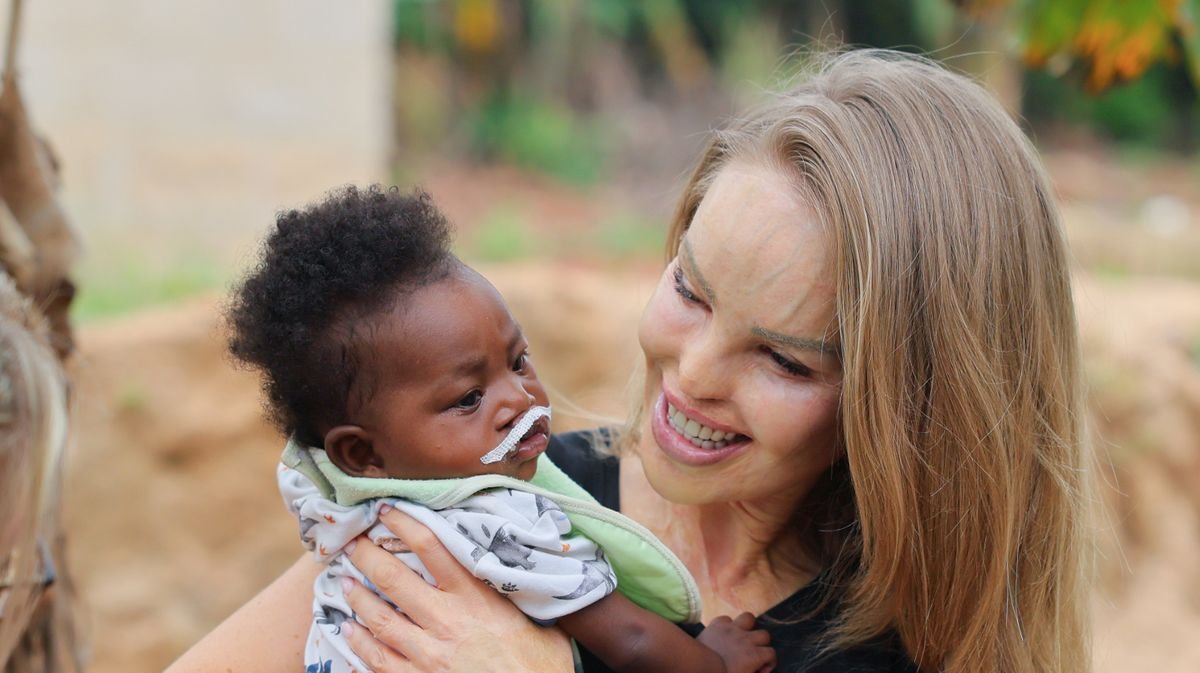

Families in developing nations often face intense shame and stigma due to children born with cleft lip or palate, sometimes even viewed as a curse. During a visit to Kumasi, Ghana, as a Smile Train ambassador, Katie Piper, a mother of two, was deeply moved by the struggles faced by children and families affected by cleft palates.
Having survived an acid attack in 2008, Katie empathized with these families, sharing stories of infants suffocated or drowned at birth and mothers being labeled as cursed due to misconceptions about cleft conditions being linked to pregnancy mishaps.
Smile Train, the world’s largest cleft-focused organization, supports local medical professionals in over 75 countries to offer free, safe, and high-quality cleft lip and palate surgeries along with comprehensive care for children in need.
Katie, recognized with an OBE for her charitable efforts, recounted a poignant encounter with a five-month-old baby named Richlove Amoateng and her mother, who had isolated the child due to community stigmatization over the cleft condition.
Cleft lip, a birth defect where parts of the upper lip do not fuse correctly, affects approximately one in 700 newborns globally each year. The exact cause is uncertain, though genetic factors play a role. Developed countries like the UK provide prompt treatment, but in many developing regions, access to care is limited or nonexistent.
Apart from cosmetic concerns, children with cleft conditions may struggle with eating, breathing, and speaking. In countries like Ghana, lack of awareness leads to shame and hiding of affected children, perpetuating social stigma. Katie highlighted the challenges faced by these families and emphasized the importance of raising awareness and providing timely care.
Drawing from her own experience of enduring multiple surgeries after the acid attack, Katie stressed the significance of timely medical intervention and support for individuals with visible differences. She shared heartwarming stories, like that of Eunice, a cleft child whose father’s proactive approach helped shift community perceptions about the condition.
Katie’s advocacy for accessible healthcare echoes her belief in the essential role of services like the NHS as a safety net for all individuals, emphasizing the need for equal healthcare opportunities regardless of birthplace. Her resilience and empathy towards cleft children and burn survivors exemplify her commitment to promoting inclusivity and support for those facing physical challenges.