



Recent discoveries of cave fossils shed light on the gruesome practices of a distant human precursor, indicating that they engaged in cannibalism within their own groups, including adults and children.
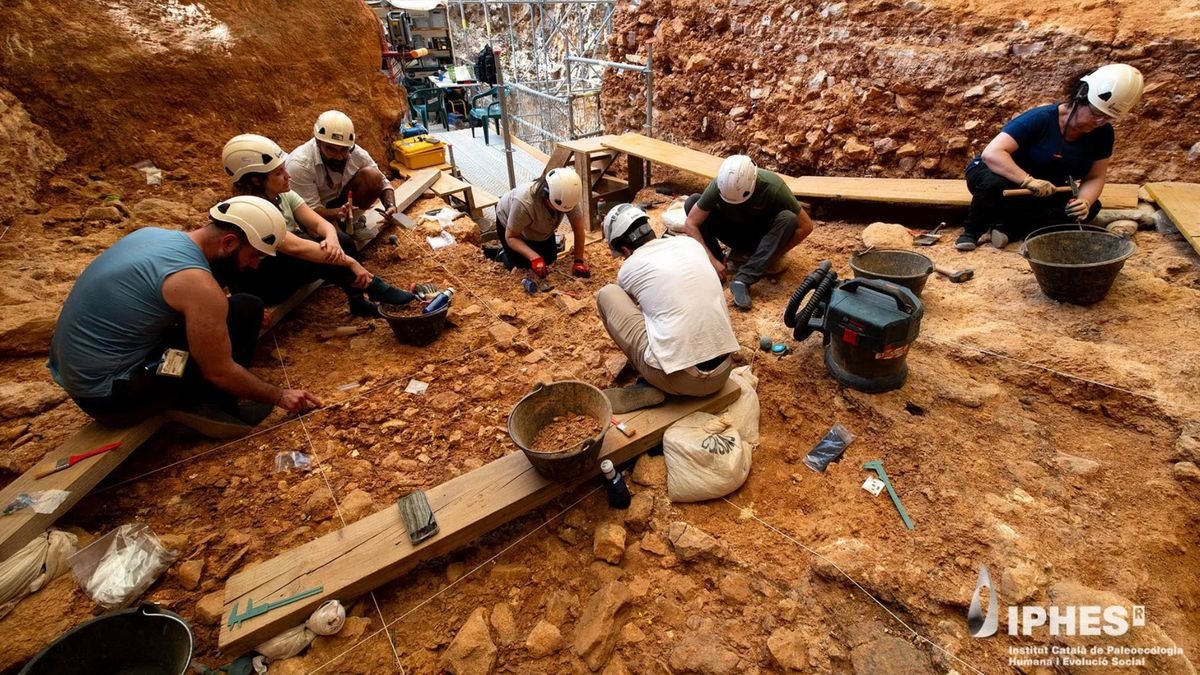
A team of researchers from the Catalan Institute of Human Paleoecology and Social Evolution (IPHES) uncovered around twenty-four bones and teeth in the Gran Dolina cave at the Archaeological Site of Atapuerca in Burgos, northern Spain. These remains, comprising skull fragments, vertebrae, arm and leg bones, as well as three teeth, belonged to the ancient human ancestor Homo Antecessor, who lived between 770,000 and 1.2 million years ago.
According to the institute’s report, the collection of bones from Spain suggests that a specific group of Antecessor individuals practiced cannibalism within their community. Examination of the bone fragments revealed distinct cut marks made by stone tools, indicating the removal of flesh. Previous findings at the site also showed similar marks on bones of young children, with the new discovery on adult remains suggesting that cannibalistic activities were carried out on members of various age groups.
Analysis of the bone cluster suggested that the cave was inhabited by approximately thirteen to fifteen individuals, a larger population size than previously thought.
The recent findings have provided researchers with valuable insights into the daily life and social dynamics of this ancient human species. The team revisited the Aurora layer within the cave, where the initial fossils were discovered in the 1990s, and promptly unearthed the new remains.
Among the notable discoveries is the first ulna, a forearm bone, ever found at the site, along with fragments of a tibia, femur, and humerus. While many of these bones were fragmented, they will aid archaeologists in understanding the ancient community that resided there hundreds of thousands of years ago. These findings complement earlier discoveries dating back 850,000 years, including an initial neck bone fragment unearthed in 2025 that hinted at Antecessor’s cannibalistic behaviors.
Researchers, who announced the discovery on July 24 last year, have been uncovering evidence of ancient humans butchering each other at the site for many years.
Lead coordinator at IPHES, Palmira Saladie, described the discovery as indicating that children were treated like prey. The child, aged between two and four years old, whose bone was found, had been decapitated, leading researchers to believe the child was consumed postmortem.
Several other bones, discovered alongside remains of nine other individuals, also showed cut marks and fractures believed to have been made to access marrow within the bones.
Saladie expressed that the new discoveries mark a significant turning point in their research at the site, where cannibalism has been a focal point. She noted the importance of the appearance of adult individuals with cut marks, indicating that cannibalism was not exclusive to the young members of the group.
The discoveries offer a more complete understanding of the biology, demography, and behaviors of Homo antecessor, as stated by IPHES archaeologist Andreu