


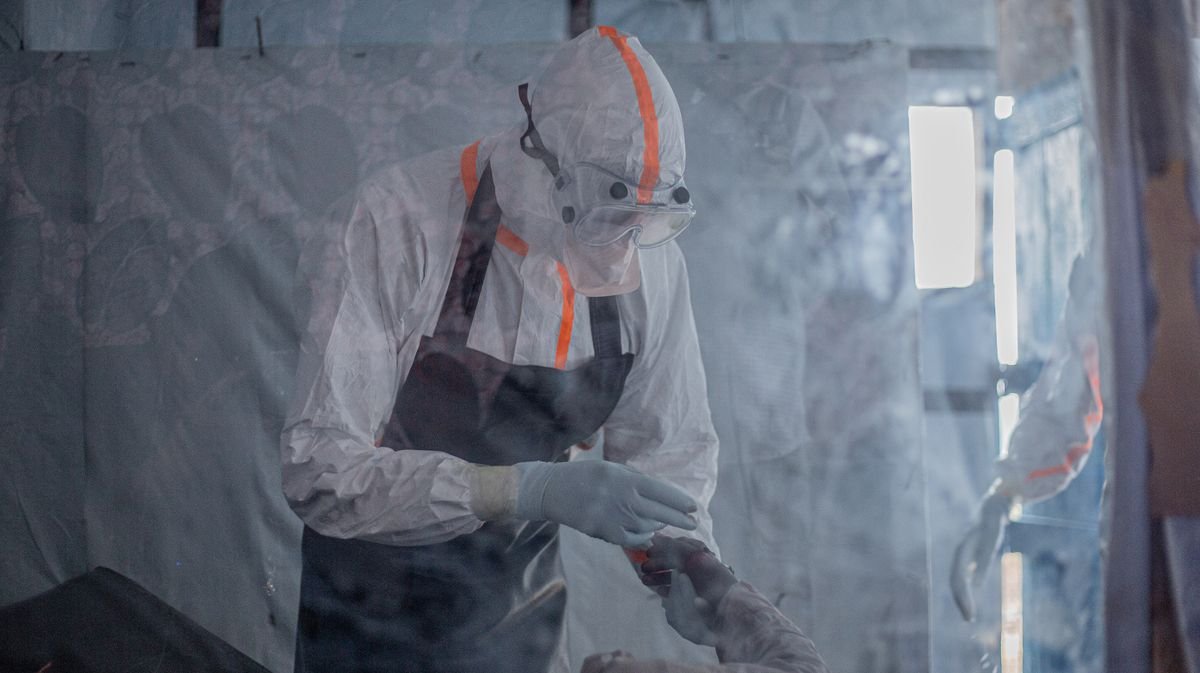

In the span of a single day, an additional 37 fatalities due to the Ebola virus were documented in the Democratic Republic of the Congo, marking one of the highest daily death tolls since the onset of the outbreak. The Ministry of Health in the country revealed that the death toll has now climbed to at least 930 as the lethal virus continues to spread, causing concerns about safety that are impeding relief operations in severely affected regions.
Out of the 2,344 confirmed cases reported by Saturday, the 37 deaths occurred within a 24-hour period from Friday to Saturday. The outbreak, which commenced on May 15, is currently the most rapidly escalating Ebola outbreak ever recorded, largely attributed to the uncommon Bundibugyo virus strain responsible for the crisis, which lacks an approved vaccine or treatment.
The virus, known for its high transmissibility, can be transmitted to humans from wild animals and further spreads among the human population through contact with infected bodily fluids like blood, vomit, or semen, as well as via contaminated surfaces such as clothing and bedding.
The latest update from the Democratic Republic of Congo’s Health Ministry indicates that 724 individuals are presently isolated in hospitals, with response efforts being intensified in affected health zones. The ministry reported 22 new recoveries within a 24-hour period, signifying progress in patient care and support capabilities.
While the disease is rare, it poses severe and often fatal consequences. The recent surge in fatalities coincides with challenges faced in the worst-hit province of Ituri, where safety concerns have hindered response efforts. Five out of the country’s 26 provinces have been affected, all situated in the eastern region plagued by rebel violence.
Since the declaration of the outbreak in mid-May, there have been at least 12 recorded attacks, primarily fueled by skepticism and rumors, targeting health facilities and teams. Notably, health workers have protested against unpaid salaries, leading to 36 deaths among infected healthcare workers.
Numerous assaults on healthcare centers and workers have been carried out by enraged mobs, storming treatment facilities or targeting response teams in the field. Pierre Akilimali, the Ebola response incident manager, highlighted the challenges faced by frontline workers, including burial teams encountering threats.
Dr. Adelard Lufongola, the operations manager for the Ebola response, emphasized that the attacks extend beyond healthcare teams to include frontline workers like burial teams who have also been targeted. He mentioned instances of response teams being held captive in certain health zones and threats aimed at burial teams in cemeteries and communities.
Residents in Ituri, the epicenter of approximately 90% of cases, have witnessed health and aid workers departing from remote hotspot communities for safer areas like Bunia. The United Nations recently expressed concerns over escalating violence hindering the Ebola response, limiting access to treatment centers and surrounding communities.
The World Health Organization raised alarms over 80% of new Ebola cases emerging from untraceable transmission chains, indicating a rapid spread beyond the capacity of health authorities to monitor despite ongoing response efforts.