


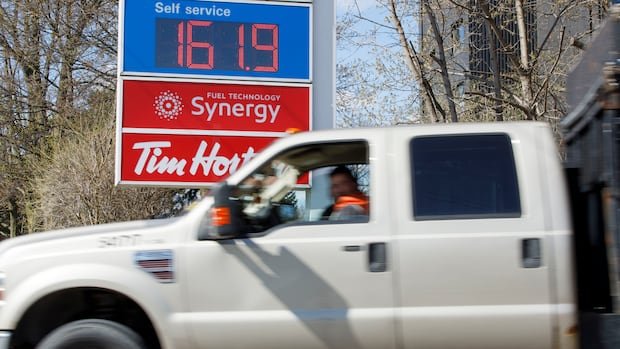

Canada’s yearly inflation rate increased to 3.1% in September, as reported by Statistics Canada on Monday, posing a challenge for the Bank of Canada as it approaches its upcoming rate announcement. The consumer price index rose by 0.1% last month compared to August, driven by heightened benchmark oil prices due to Middle East conflicts. However, the switch to more affordable winter gasoline blends offered some relief in September, despite a significant 27.8% year-over-year surge in pump prices.
CIBC’s chief economist, Avery Shenfeld, highlighted the impact of gasoline price inflation on Canadians, noting that excluding these increases, the core inflation measures remain around 2%. Excluding gasoline, consumer prices saw a 2.2% year-over-year growth in September. Average regular gasoline prices stood at $1.824 per liter nationally, marking a nearly 33% increase from a year earlier. Meanwhile, diesel prices surged by almost 80% over the past year, according to Kalibrate data.
In September, grocery prices saw a 1.7% year-over-year rise, a decrease from the 2.8% hike in August. This marked the smallest yearly increment since May 2024, attributed to lower costs of fresh vegetables and reduced prices in the “sugar and confectionary” category. Despite the slowdown in grocery price inflation, prices have climbed by 33.0% since September 2020, according to StatCan.
Shelter prices increased by 1.8% year-over-year in September, up from 1.5% in August. Statistics Canada’s core inflation measures slightly eased on a monthly basis in September, which are closely monitored by the Bank of Canada. A Bloomberg survey projected a 3.18% year-over-year rise in the September consumer price index.
Economists emphasized the need for the Bank of Canada to carefully consider its actions amid the current economic landscape. Governor Tiff Macklem warned of elevated global energy prices impacting inflation projections ahead of the October 28 rate announcement. The Bank of Canada’s latest Business Outlook Survey anticipates an average inflation rate of 3.7% over the next year. Policymakers are weighing the potential need for a rate hike to manage inflation, but uncertainties surrounding energy markets and ongoing conflicts pose challenges.
Analysts have differing views on the Bank of Canada’s next steps, with opinions ranging from maintaining rates unchanged through 2026 to potential gradual increases in 2027. The central bank is navigating a delicate balance between economic improvements and inflation risks, as global energy prices and geopolitical tensions continue to influence the economic outlook.