


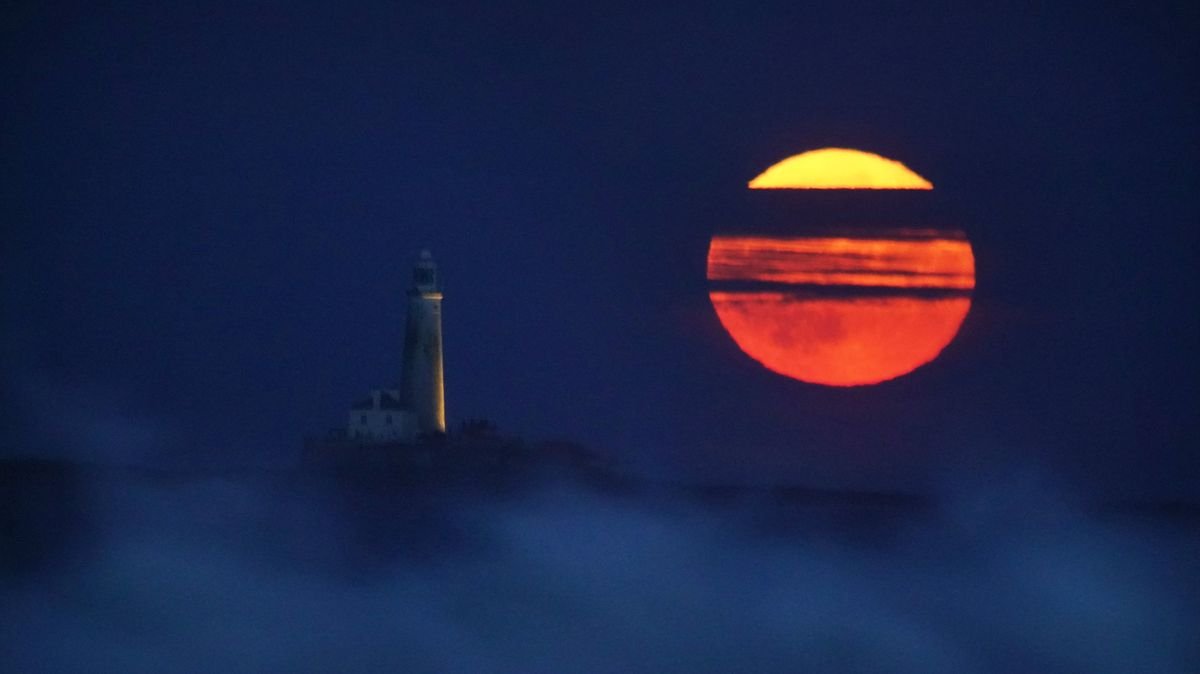

Skywatchers in the UK are in for a treat as the Buck Moon is poised to dazzle this week, offering a chance to witness one of the most significant celestial events of the summer. While the peak illumination of the moon is officially scheduled for 3:36 pm BST on July 29, it will occur when the moon is below the UK horizon. However, once night falls on Tuesday and Wednesday, the moon will still appear full to the naked eye.
Anticipated to rise at 8:07 pm on July 29, the Buck Moon is expected to capture the attention of millions across the UK. The name “Buck Moon” originates from the period when male deer, known as bucks, start growing a new set of antlers rapidly. Full moons occur approximately every 29.5 days, corresponding to the time taken for the moon to complete a lunar phase cycle.
July’s full moon, also known as the Thunder Moon due to the typical thunderstorms in the month, carries additional traditional monikers like the Hay Moon, reflecting the annual hay harvest. Weather forecasts suggest favorable viewing conditions for much of the UK on the night of July 29, especially in central, southern, and eastern England, with clear skies and minimal cloud cover.
Beyond the Buck Moon, several other celestial events are lined up for the summer. The ongoing Perseid meteor shower will continue through July and August, peaking on the night of August 12. Concurrently, a total solar eclipse is scheduled for August 12, visible in parts of Europe, while a partial solar eclipse, with the moon covering around 90% of the sun at its peak, will be visible in the UK. Additionally, a partial lunar eclipse is set to grace the night sky in the early hours of August 28, offering another rare sight for UK observers.