


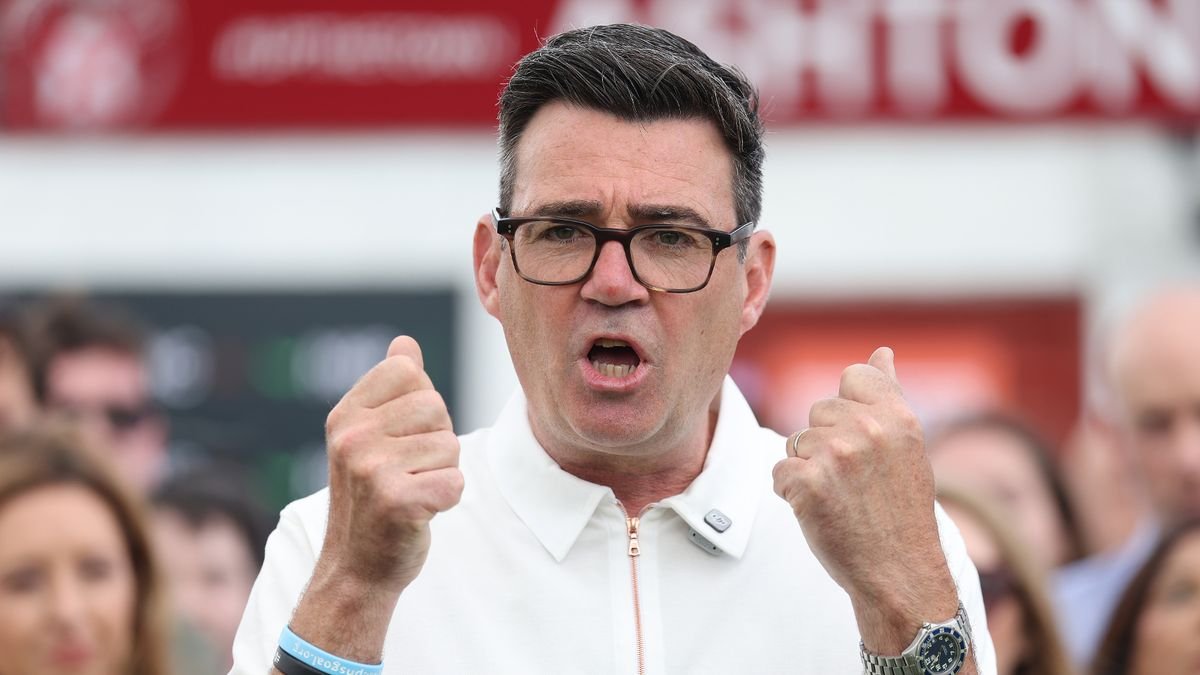

Andy Burnham is set to make a comeback to the House of Commons next week, nearly ten years after resigning as an MP. The former Mayor of Greater Manchester will be sworn in as the new MP for Makerfield on Monday, following his decisive victory over Nigel Farage’s Reform party in a crucial by-election.
During a celebratory rally in the North West constituency on Friday, Burnham, who has expressed his intention to participate in any Labour leadership contest, emphasized the need for change after decades of ineffective policies. Burnham highlighted the opportunity to reshape the country and restore hope by demonstrating that politics can have a positive impact.
Louise Haigh, a key supporter of Burnham and former Transport Secretary, has urged Keir Starmer to reflect on the election outcome and contemplate stepping down to avoid a contentious leadership battle. Burnham’s close associates are advocating for Starmer to consider a smooth transition of power, potentially involving the Prime Minister announcing his resignation and outlining a departure timeline. This scenario could become more plausible if the Cabinet, currently showing public support for Starmer, signals that his leadership is untenable.
While Burnham’s allies are pushing for a seamless transition, the possibility of a leadership challenge looms if other Labour MPs, particularly Wes Streeting, express their ambitions for the top position. Streeting has affirmed his willingness to compete and has called for a robust debate on the party’s future direction.
If Burnham and Streeting can reach an agreement, and other Labour MPs do not challenge, there could be a scenario where Burnham assumes the role of Prime Minister without a contest. However, the current Prime Minister has shown resolve following Burnham’s victory, stating his commitment to fulfill his five-year mandate from the 2024 election despite calls for resignation.
The situation could escalate if the Prime Minister refuses to step down, potentially triggering a leadership challenge by Starmer’s opponents. In response to this possibility, Starmer has asserted his readiness to stand in any leadership contest, setting the stage for a contentious period within the Labour Party over the summer.
For a leadership challenge to materialize, the Prime Minister’s rivals must secure support from 20% of Labour Party MPs to launch a bid. The National Executive Committee (NEC) would then determine the timing of the contest, likely extending into the summer with engagements for party members and unions.
In the event of a challenge, the new leader could be declared before Labour’s annual conference in September if they receive over 50% of first preferences through successive voting rounds. However, Labour’s ex-deputy leader, Harriet Harman, has cautioned against a protracted contest, suggesting a faster process where only MPs decide the leader, which would necessitate approval from the party’s governing body.