


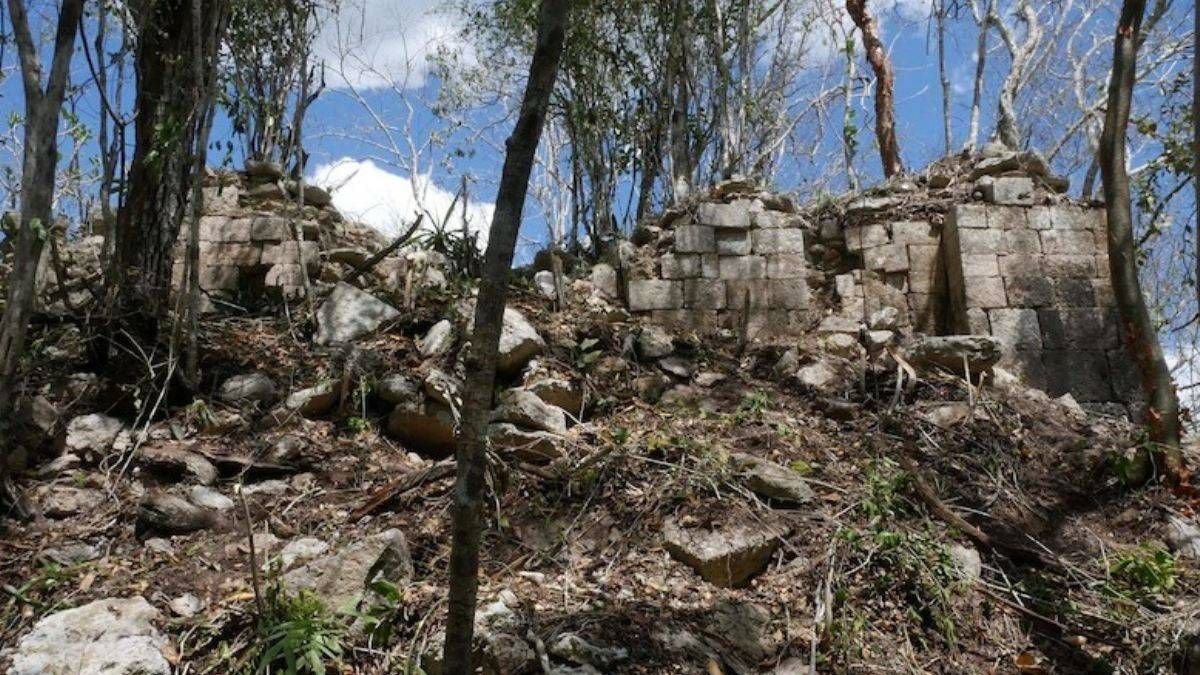

A group of adventurers has discovered an ancient Mayan city hidden in the Mexican jungle for over a millennium. The team, including explorers from Slovenia and Mexico, stumbled upon the city named Minanbe while conducting research in the Calakmul Nature Reserve in Mexico’s state of Campeche.
Covering an area of 13 hectares, the city is believed to have been constructed between 600 and 900 AD. Lead by archaeologist Ivan Sprajc from the Research Centre of the Slovenian Academy of Arts and Sciences, the exploration was a result of analyzing LiDAR imagery by archaeologists Atasta Flores Esquivel, Vitan Vujanović, Israel Chato López, and Quintín Hernández Gómez.
The city boasts various structures, including a 13-meter-tall pyramid in the Rio Bec style and a relief depicting water elements and a beheading. Vujanović expressed astonishment at finding a well-preserved temple and a stele with glyphs for the first time.
This discovery concludes a project focused on exploring the Central Maya Lowlands, supported by the Archaeology Council of the National Institute of Anthropology and History. The team navigated challenging forest areas using machetes and quad bikes, indicating the significance of their findings.
Sprajc highlighted the uniqueness of Minanbe, devoid of any signs of looting, making it a significant and unexpected find. The name Minanbe, derived from Yucatec Maya, signifies ‘there is none’ and ‘path,’ aligning with the tradition of naming sites in Maya archaeology. Sprajc noted that Minanbe reflects typical patterns observed in the region, adapted for an agricultural power structure, though questions remain about external influences on the city’s social dynamics.