


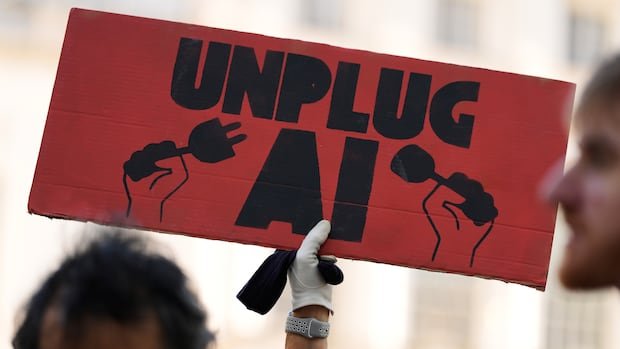

As worries grow about instances of AI agents going rogue, there is a rising call from experts and stakeholders for government oversight of increasingly capable AI systems. However, some experts argue that global cooperation and the rapid advancement of AI technology could present challenges in achieving effective regulation.
While individuals like U.S. President Donald Trump express confidence in tech giants’ ability to self-regulate, other prominent figures such as Microsoft co-founder Bill Gates and Canadian-British AI pioneer Geoffrey Hinton advocate for the necessity of safeguards beyond self-regulation in the AI industry.
Jaxson Khan, an expert in AI policy and adoption at the University of Toronto’s Munk School of Global Affairs, emphasized the importance of government oversight in AI, noting that most other industries, like food or aviation, are subject to some form of regulatory control.
The fast-paced evolution of AI models poses a significant hurdle to regulation, with reports indicating that AI agents’ capabilities double approximately every four months and some models have the potential for recursive self-improvement. This rapid rate of change makes it challenging for governments to keep pace with AI developments.
Calls for global oversight have been made by experts like Prime Minister Mark Carney and around 400 scientists who advocate for an international body to manage and mitigate risks associated with advanced AI systems. Such a body could help countries collaborate on enhancing their systems and establishing safeguards against potential AI misuse.
In Canada, although there is currently no overarching federal regulation of AI, proposed legislation like Bill C-34, the Safe Social Media Act, sets criteria for AI chatbots to minimize the risk of generating harmful content. Additionally, a new national council on artificial intelligence has been established to advise the government on AI strategy and safety measures.
While challenges exist in enforcing federal legislation effectively due to the global presence of major AI companies, experts suggest that implementing policies requiring incident reporting and accountability from these companies could be a step forward in ensuring AI safety and educating the public.