


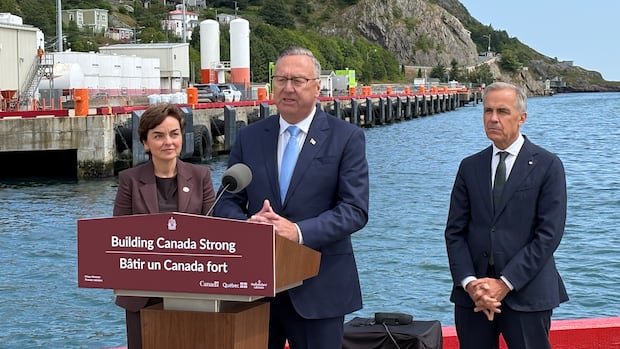

Ottawa has announced what is being termed as the largest clean energy investment in North American history. Prime Minister Mark Carney, along with N.L. Premier Tony Wakeham and Quebec Premier Christine Fréchette, unveiled a new agreement in St. John’s regarding Churchill Falls and other electricity projects in Labrador. Wakeham expressed optimism about leaving behind past agreements in favor of a new deal beneficial to all involved.
The $10 billion investment from Ottawa will go towards enhancing the Churchill Falls generating station, developing the Gull Island hydroelectric project, constructing transmission lines, and implementing a 2,000 MW onshore wind energy project in Labrador. These initiatives are valued at nearly $70 billion and are expected to significantly increase the generating capacity of Churchill Falls.
The projects are projected to create 23,000 jobs and will provide Quebec with a secure power source while enabling N.L. to generate additional revenue from its natural resources. Additionally, a 15% rebate on electricity bills for N.L. ratepayers is set to save households an average of $351 annually.
The new agreement between Newfoundland and Labrador Hydro and Hydro-Quebec marks a considerable increase in value for N.L., from $36 billion in the previous memorandum to $49 billion in net present value. The agreement is valid until March 31, 2027, with the possibility of earlier definitive agreements.
Furthermore, the deal includes provisions for potential expansion of the Churchill Falls facility and upgrades to increase its capacity. N.L. Hydro estimates that Newfoundland and Labrador will gain approximately 760 MW more power under this agreement. The agreement also stipulates a rise in the price paid by Hydro-Quebec for the power supplied by N.L.
The agreement aims to benefit Newfoundlanders and Labradorians by providing greater control over their resources and economic development opportunities. It also includes plans for the development of a wind project facility and support for Labrador’s mining industry.
However, the upcoming Quebec election may pose challenges to the continuity of the agreement, with the Parti Québécois expressing reservations. Fréchette emphasized the positive impact of the deal on Quebec’s energy supply and job creation, highlighting the potential risks of dismantling the agreement.
In conclusion, the agreement represents a significant milestone in clean energy investment and economic development for both Newfoundland and Labrador and Quebec.