


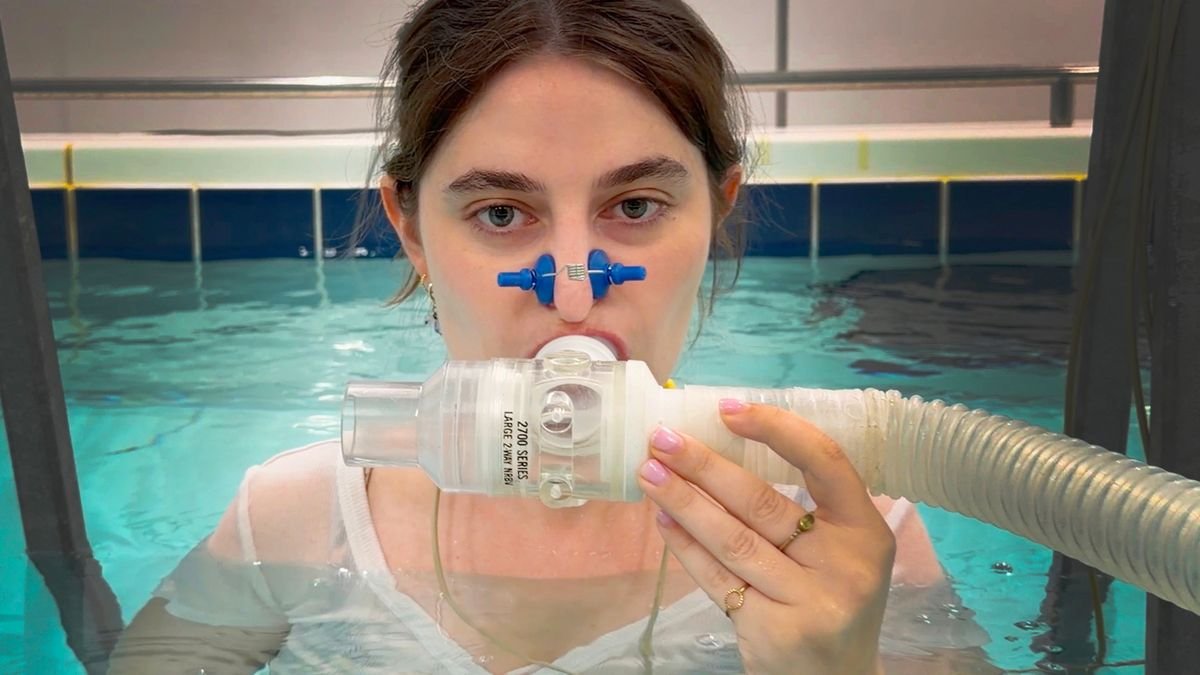

As the heatwave persists, many people are flocking to beaches, lakes, and rivers to seek relief from the rising temperatures. While the land may be scorching, the water remains cold enough to pose a significant drowning risk. A visit to the Extreme Environments Lab at the University of Portsmouth shed light on the dangers of cold water shock.
During the experiment, I was equipped with a heart monitor and breathing tube and immersed in a specialized plunge pool set at 15C, the current average sea temperature in the UK. The room temperature was maintained at 28C to simulate the prevailing heatwave conditions.
Upon entering the water, my gasp rate, indicating the volume of oxygen intake, spiked from a normal 0.3 liters to 1.5 liters, a level that could lead to drowning if submerged. Additionally, my heart rate surged from a resting 80 beats per minute to 110, potentially causing blood vessel constriction and heart complications, even in young individuals. Cold water shock, triggering gasping or heart failure, is a primary factor in approximately 60% of drowning incidents.
Extended exposure to cold water also affected my motor skills, as evidenced by the increase in time taken to perform a simple typing task after being in the water. Infrared cameras demonstrated the drastic change in body heat, shifting from warm yellow hues before immersion to cold blue tones afterward.
Testing the pool’s flume function, designed to create a strong current, proved challenging even for experienced swimmers. Despite my proficiency, just three minutes of battling against the cold water left me fatigued and breathless.
Professor Mike Tipton, a renowned expert on extreme environments at the University of Portsmouth, highlighted the initiation of cold shock upon sudden skin temperature decrease during immersion, leading to potential drowning risks and increased cardiac stress. He emphasized the importance of swimming safely in open water, cautioning against underestimating the hazards posed by cold temperatures, tides, and currents.
Amid the ongoing heatwave in the UK, with temperatures reaching up to 34C in some regions, health alerts have been issued, signaling potential impacts on health and social care services. The RNLI advises individuals in distress to adopt the ‘Float to Live’ technique, promoting relaxation in water and controlled breathing to enhance survival chances.
For onlookers witnessing water emergencies, the National Water Safety Forum recommends the ‘Phone, Float, Throw’ approach, involving alerting emergency services, instructing the person to float, and providing buoyant aids.
The campaign ‘Save Lives For Sam’ by The Mirror aims to address the rising drowning incidents, advocating for comprehensive water safety education, public awareness initiatives, improved rescue equipment, policy reforms, and dedicated ministerial oversight. To support the cause and learn more, visit the campaign’s page.