


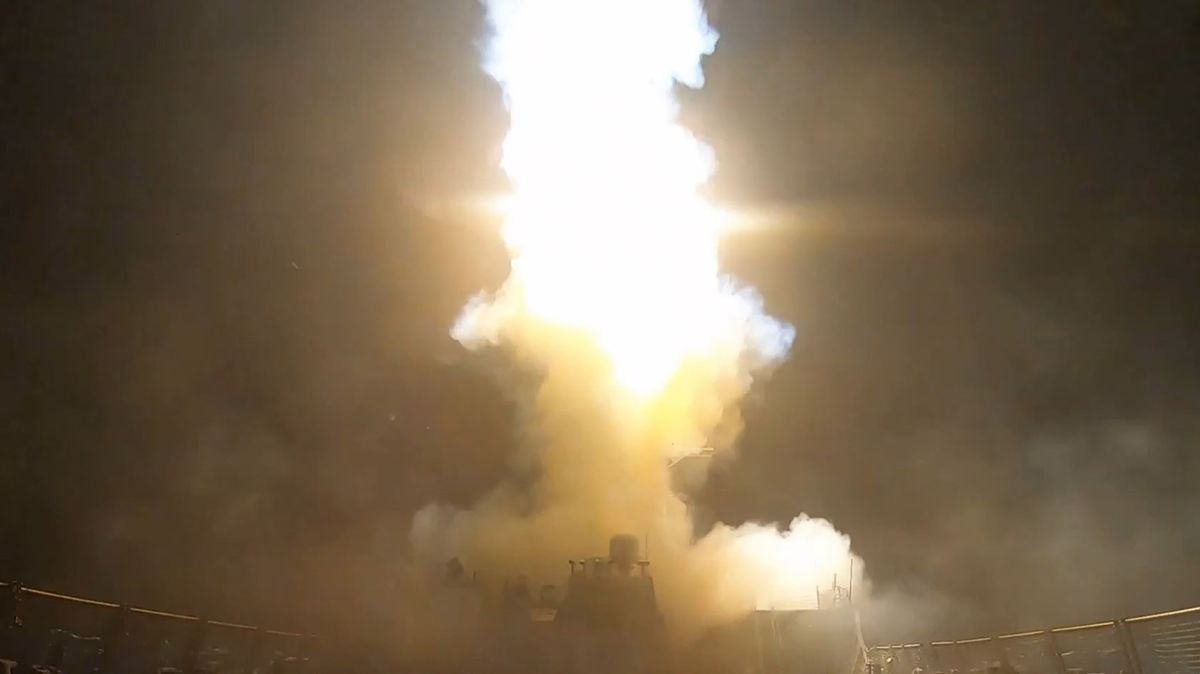

The United States has conducted strikes on over 100 locations within Iran in response to a missile attack on a ship in the Strait of Hormuz.
Following the vessel’s crew abandoning the container ship due to it being engulfed in flames, Iran retaliated by targeting sites in Bahrain, Kuwait, Qatar, the United Arab Emirates, and Oman, marking a significant escalation. The US Central Command reported hitting approximately 140 targets, focusing on missile and drone launch sites, ammunition depots, and communication facilities.
This development occurs amidst ongoing conflict initiated by Donald Trump in the Middle East earlier this year in collaboration with Israel, which shows no signs of abating despite the current 60-day period aimed at reaching a peace agreement. UK Labour minister Sir Chris Bryant expressed concerns over the lack of exit strategy in the conflict and highlighted global economic anxieties related to the Gulf situation, urging de-escalation and diplomatic negotiations.
In response to the attacks, the US emphasized that the strikes were intended to diminish Iran’s capability to threaten civilian and commercial vessels navigating the strait. President Trump recently declared the end of any interim agreements in the Iran conflict, boasting about the military actions taken.
While the US asserts that the Strait of Hormuz remains open for navigation, Iran disputes this claim. Mohammad Bagher Qalibaf, Iran’s parliament speaker, emphasized the end of unilateral agreements and the need for adherence to commitments, warning of consequences for non-compliance.
Regarding the attack on the container ship in the Strait of Hormuz, which had Indian crew members, Indian authorities condemned the incident and are collaborating with Oman on search-and-rescue efforts. India stressed the importance of unrestricted passage through the strait for maritime traffic.