


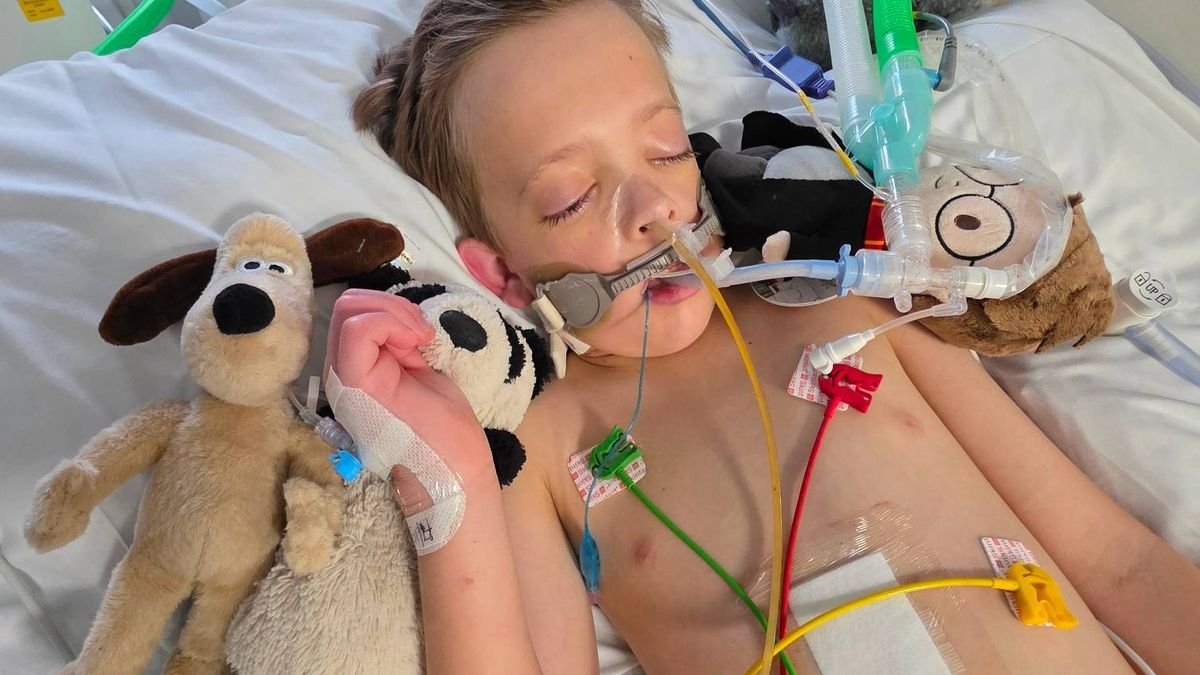

A young boy from Cornwall faced a critical situation when he lost a significant amount of blood following a routine surgery last October. Elliott Wills, residing in Truro, encountered a severe blood loss due to a ruptured main artery, putting his life in jeopardy. Despite having spherocytosis, an inherited blood disorder, Elliott was rushed to emergency surgery as medical professionals struggled to replace the seven liters of blood he had lost rapidly.
Elliott’s father, Phill Wills, witnessed the urgency as a team of medical staff worked tirelessly for three hours, transfusing 23 units of blood products to stabilize his son’s condition. The situation was dire, with doctors warning of the gravity of Elliott’s blood loss. Fortunately, Elliott’s resilience and the swift actions of the medical team led to his survival.
Now in good health, Elliott is looking forward to his upcoming birthday, a milestone made possible by the selflessness of blood donors. During National Blood Week (8-14 June), Elliott and his family are advocating for increased blood donations to save more lives like his.
Elliott’s ongoing need for B negative blood for regular transfusions became more critical last year when complications from a virus necessitated surgical removal of his spleen and gall bladder. Despite receiving necessary blood transfusions during his operation at Bristol Royal Hospital for Children, Elliott experienced a sudden drop in blood pressure and severe internal bleeding, leading to a challenging recovery process.
Following a harrowing ordeal that included seizures and induced coma, Elliott’s gradual recovery allowed him to return home after three weeks in the hospital. Despite some limitations in physical activities, Elliott is back at school and enjoying time with friends, including playing sports with caution.
Expressing gratitude for the life-saving blood donations, Elliott and his family acknowledge the vital role of blood donors and NHS teams in providing essential care to patients in need. The importance of blood donation is underscored by the story of Elliott’s survival, emphasizing the ongoing need for donors, especially those with rare blood types, to support critical medical treatments.
With the NHS requiring a substantial number of new donors each year to meet patient demands, the call for donors with O negative, B negative, and Ro blood types is particularly urgent. Blood donations play a crucial role in treating various medical conditions, including cancer, blood disorders, and surgical emergencies, underscoring the continuous need for donors to support healthcare services.
Individuals interested in making a difference through blood donation can register and schedule appointments through the NHS Give Blood app or visit www.blood.co.uk. By contributing to blood donation efforts, individuals like Elliott can receive life-saving treatments and inspire others to support this essential cause.