


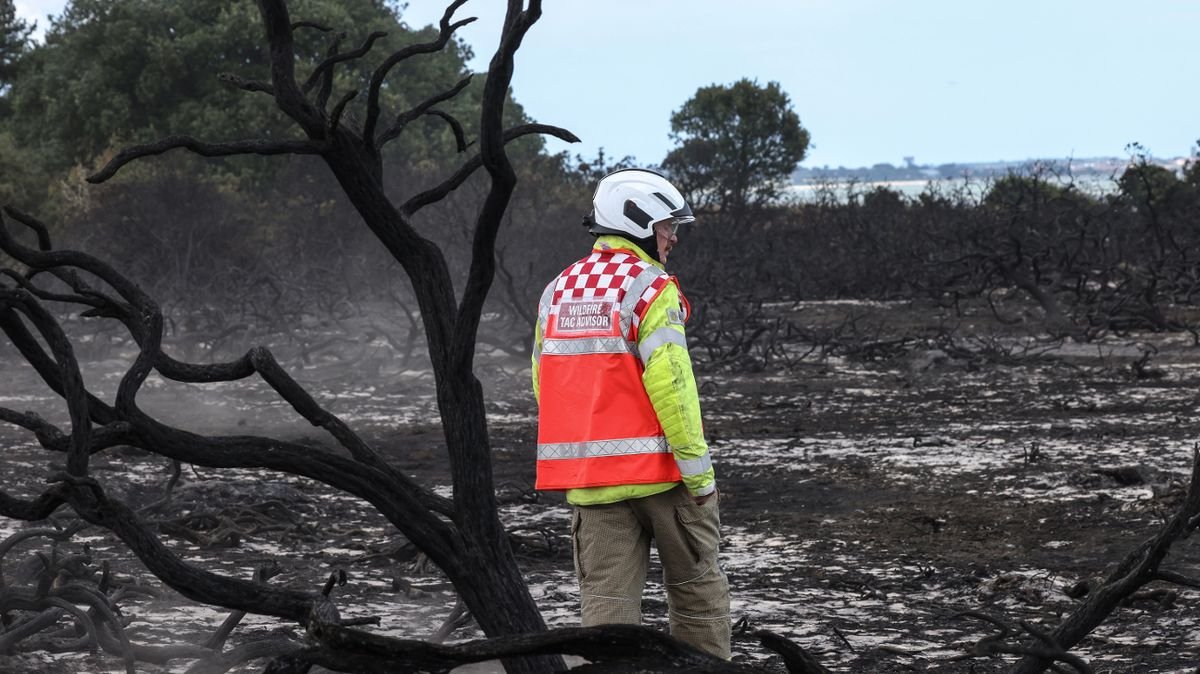

Rare wildlife habitats in the UK that have been severely affected by the recent heatwave may require up to 25 years to fully recover, as indicated by conservationists.
The cooler weather forecasted across various regions in the UK could alleviate the strain on firefighters. However, this relief follows a period where fire crews battled numerous grassland fires, spanning from Snowdonia National Park to Suffolk, following the driest July on record in England and Wales.
Concerns raised by campaigners and Government Ministers highlight the potential for extreme weather events to become more frequent due to global warming. Recent devastation in Sychnant Pass, North Wales, where vast land areas were destroyed, serves as a stark reminder of the impacts of such events.
A significant incident was declared after a fast-moving fire on Conwy Mountain led to the evacuation of 36 homes on July 12. Images now depict extensive areas of charred land, particularly within Snowdonia National Park, designated as a Site of Special Scientific Interest. Authorities urge the public to avoid affected areas to prevent hindering firefighting efforts.
Increased visitor activity in wildfire zones, including ‘wild camping,’ poses additional risks and strains resources. Precautionary measures, such as refraining from disposable barbecues and ensuring proper disposal of litter, are essential to mitigate wildfire risks.
Recent weather patterns have marked July as the driest on record in England and Wales, characterized by extreme heat and minimal rainfall, according to the Met Office. Severe drought conditions have led to water scarcity, with millions under hosepipe bans.
The devastating blaze at Dunwich Heath in Suffolk, a critical habitat for rare species, has raised concerns about the recovery of these ecosystems, potentially taking decades. The impact of the fire on wildlife and habitats is described as tragic and may have long-lasting consequences.
The ongoing drought conditions pose challenges to food supply chains, with the National Farmers’ Union highlighting poor crop yields and the need for water conservation measures. Farmers are urged to invest in water storage systems to safeguard future production and enhance food security.
Drought declarations have been extended across England and Wales, with amber heat health alerts issued for various regions. The need for water conservation and proactive measures to address food security concerns is emphasized amid changing climate patterns.