


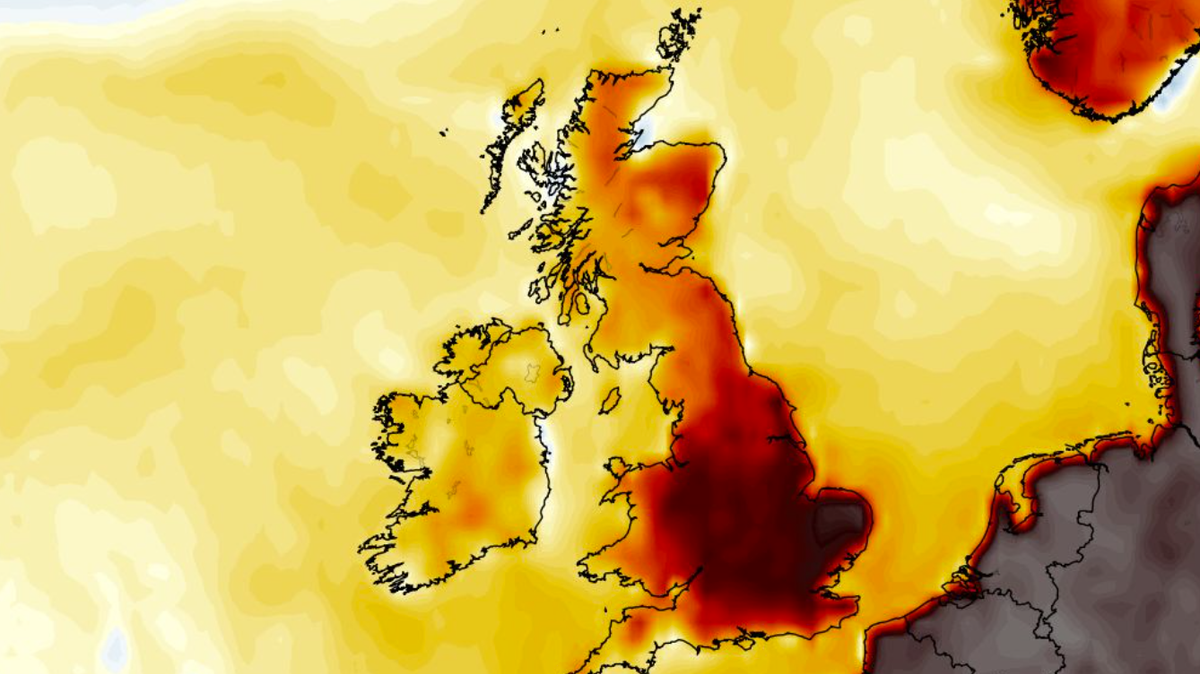

The UK may experience additional heatwaves before the conclusion of August, according to the latest forecast from the Met Office. Weather models are indicating a shift towards more settled and warmer conditions as August progresses, with the potential for further heatwaves, especially later in the month.
Maps displaying temperature anomalies suggest that temperatures could be more than five degrees Celsius above the long-term average for early August across much of England. While projections for the middle and end of the month are not yet available, the Met Office cautions that the exact locations, intensity, and duration of any potential heatwaves remain uncertain.
The Met Office emphasized that while the possibility of future heatwaves exists, it is not guaranteed. The longer-term outlook indicates that temperatures are expected to be above average overall, with a risk of hot weather and heatwaves in the latter part of August.
Factors influencing the development of heatwaves include the positioning and strength of high-pressure systems, the origin of air masses moving over the UK, and the potential impact of Atlantic disturbances on the prevailing warmer conditions.
Looking ahead, unsettled weather conditions are forecast for the end of July and the beginning of August. The Met Office predicts changeable weather patterns with a mix of sunny intervals and occasional rainfall across many regions. Northwestern areas are likely to experience more rainfall, although showers may also occur in southeastern areas. There are indications that high pressure could return, leading to dry conditions, particularly in the south.
Winds are expected to be predominantly light to moderate, occasionally fresh or strong along coastal areas, especially in the north. Temperatures will be around or above normal, with the warmest conditions anticipated in the south and the potential for a return to very warm temperatures at the start of August.
This forecast follows a Met Office report released in May, which projected an 86 percent likelihood that a year between 2026 and 2030 will be hotter than the current warmest year on record, 2024. Additionally, there is a 91 percent probability that global temperatures will temporarily exceed 1.5 degrees Celsius above pre-industrial levels within the next five years.
Exceeding the 1.5-degree Celsius global warming limit set by the Paris Agreement significantly escalates the risk of severe climate impacts, including ecosystem degradation, species loss, extreme weather events, food and water insecurity, heat-related fatalities, and the potential melting of ancient ice sheets in Greenland and Antarctica, leading to a substantial rise in sea levels.