


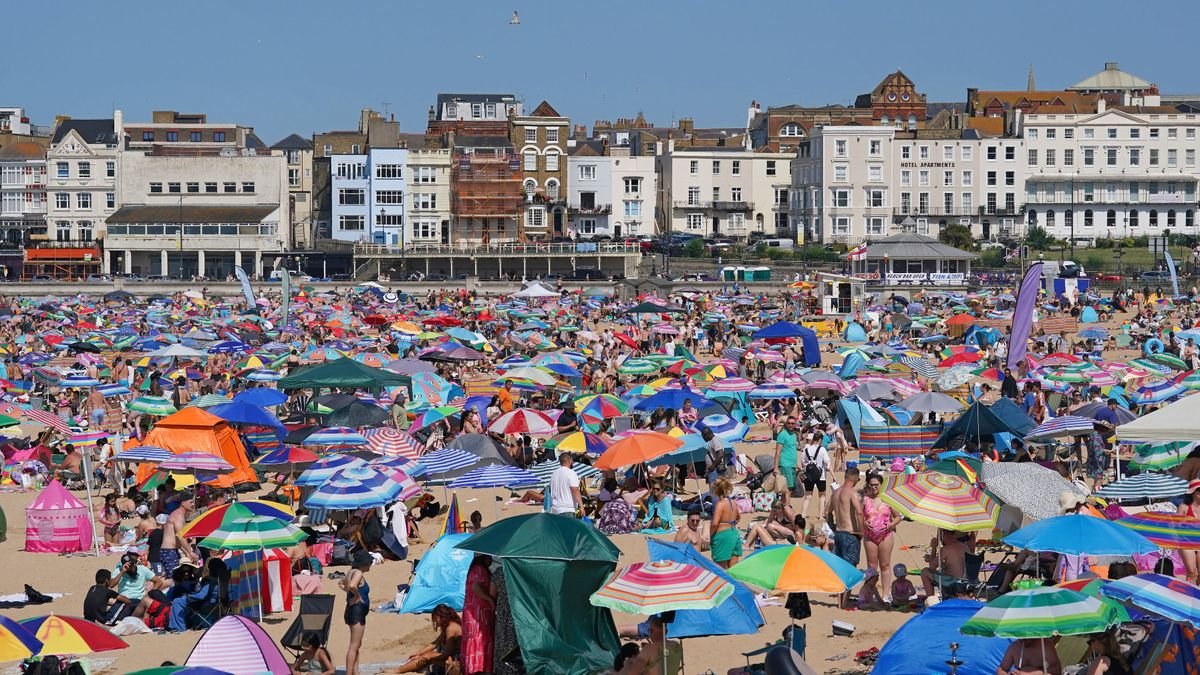

Next weekend, temperatures may reach 25C, with the Met Office indicating a heightened possibility of heatwave conditions in the next three months.
Although the UK is preparing for unsettled weather with rain and showers across the country in the upcoming days, conditions are anticipated to improve by the weekend.
Meteorologist Craig Snell from the Met Office mentioned a potential warming trend for the weekend, hinting at temperatures of around 24C in London on Saturday, possibly reaching the low to mid-20s in the South East.
Prior to that, rain is forecasted to move southeastward on Sunday evening, becoming heavy in parts of the north and west, accompanied by gusty winds. Showers are expected in Scotland and Northern Ireland, where conditions will turn cooler.
On Monday, a band of rain will persist in southern and eastern England, occasionally intensifying. Elsewhere, there will be brighter intervals with scattered showers, though it might feel cooler for the season.
Tuesday and Wednesday are likely to remain cool and windy, with a mix of sunshine and heavy showers, before more widespread rain potentially returns on Thursday.
Snell remarked that following a changeable week with some cooler periods, even temperatures of 24C to 25C could feel notably warmer.
The Met Office projects maximum temperatures during the working week to range from 17-18C in the south and 15-16C in the north. By the weekend, temperatures are expected to climb to the low 20s in the south, with the South East possibly hitting 24-25C, while northern regions may see highs in the upper teens.
This warmer spell coincides with the Met Office’s three-month summer outlook for June to August, indicating a higher likelihood of a hot summer and increased chances of heatwave conditions. England and Wales recently witnessed their warmest spring on record, with the UK recording its highest May temperature to date at 35.1C in London’s Kew Gardens.
A climate attribution study conducted by Met Office scientists last summer revealed that surpassing the May temperature record has become significantly more probable due to the climate crisis. The study indicated that breaking the previous May temperature record is now around three times more likely in today’s climate compared to a natural climate unaffected by greenhouse gas emissions, occurring roughly once every 33 years instead of once every century.