


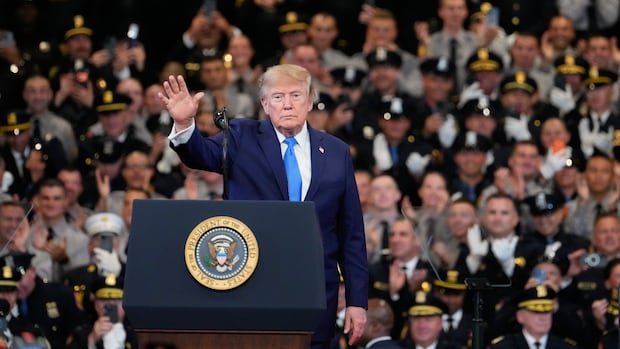

U.S. President Donald Trump has called on Americans to be willing to pay slightly higher gasoline prices to prevent Iran from acquiring a nuclear weapon. He also announced intentions to designate the Strait of Hormuz as U.S. territory soon. These statements highlight the political challenges facing Trump as increased fuel costs clash with his pledge to reduce energy expenses, with Democrats aiming to leverage the economic impact of the Iran conflict in the upcoming November midterm elections.
During a speech in Garden City, N.Y., Trump emphasized the necessity for Americans to accept a marginal increase in gasoline prices as a crucial measure to prevent a “very evil country” from possessing nuclear capabilities. He asserted that the actions taken were not only beneficial for the U.S. but also for the global community, stating that there would be no apologies for confronting Iran.
Approximately 20% of worldwide oil and LNG shipments typically traverse the Strait of Hormuz, causing oil prices to surge due to the potential for prolonged disruptions. Trump proclaimed his intentions to declare the Strait of Hormuz as U.S. territory after defeating Iran, heightening tensions over this critical waterway. The seriousness of Trump’s statement and whether it signals a new policy stance remain uncertain.
In response to Trump’s remarks, Kazem Gharibabadi, Iran’s deputy foreign minister, dismissed the notion of the strait being seized through tweets, military vessels, orders, or electoral speeches. He maintained that Iran would retain control over the opening and closing of the strait.
As the Strait of Hormuz continues to be a crucial focal point for global energy markets, oil prices have surged, approaching nearly $90 US per barrel for Brent crude, and U.S. gasoline prices reaching around $4 US per gallon.