


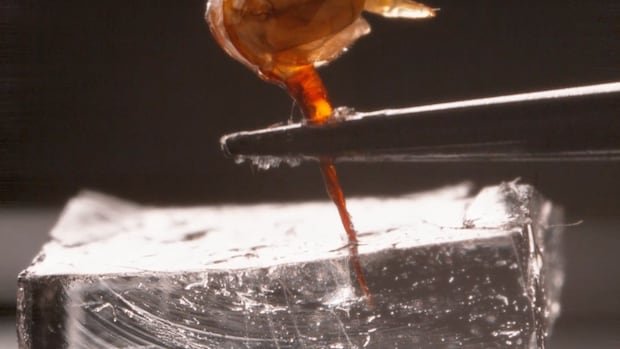

A western honey bee’s stinger is a final defense mechanism, meant to embed itself and release venom, often leading to the bee’s demise. New research featured in the Proceedings of the National Academy of Sciences sheds light on the effectiveness of this mechanism. Fiorella Ramirez Esquivel, the lead author and postdoctoral researcher at Macquarie University, emphasized the novelty of capturing the bees in action with modern cameras.
The study utilized high-speed cameras to analyze bee stings, capturing rapid movements imperceptible to the naked eye. By studying live honey bees and removing their stingers immediately after, researchers were able to observe the intricate mechanisms within the stinger. Ramirez Esquivel highlighted the time-sensitive nature of the experiments due to the stinger’s limited activity once separated from the bee.
The research revealed a unique “double piston design” within the stinger, where specialized valves work in tandem to drive the stinger deeper into the target and continuously pump venom. This intricate system, likened to a complex dance between moving components, was recreated using 3D printing for further analysis.
Juliana Rangel, an apiculture professor at Texas A&M University, expressed fascination with the study’s insights beyond traditional microscopic images. The study also explored the role of honey bee stings in recruiting other bees through the release of pheromones during attacks.
The study delved into the evolutionary significance of the honey bee’s stinging mechanism, highlighting its role in protecting the colony. Unlike other bees, the western honey bee’s stinger is barbed, allowing it to remain embedded in the target. This defense strategy, although not foolproof, enhances the bee’s chances of survival against threats with tougher skin or fur.
The research on honey bee stingers not only deepens our understanding of these insects but also raises questions about other honey-producing bee species. The complex mechanisms observed in western honey bees prompt further inquiries into the evolution and adaptations of different bee species.